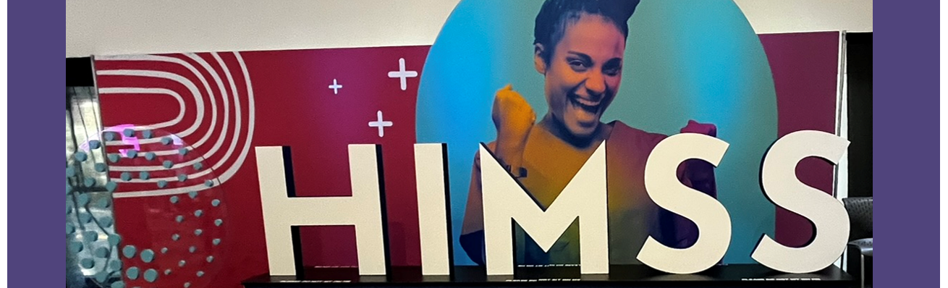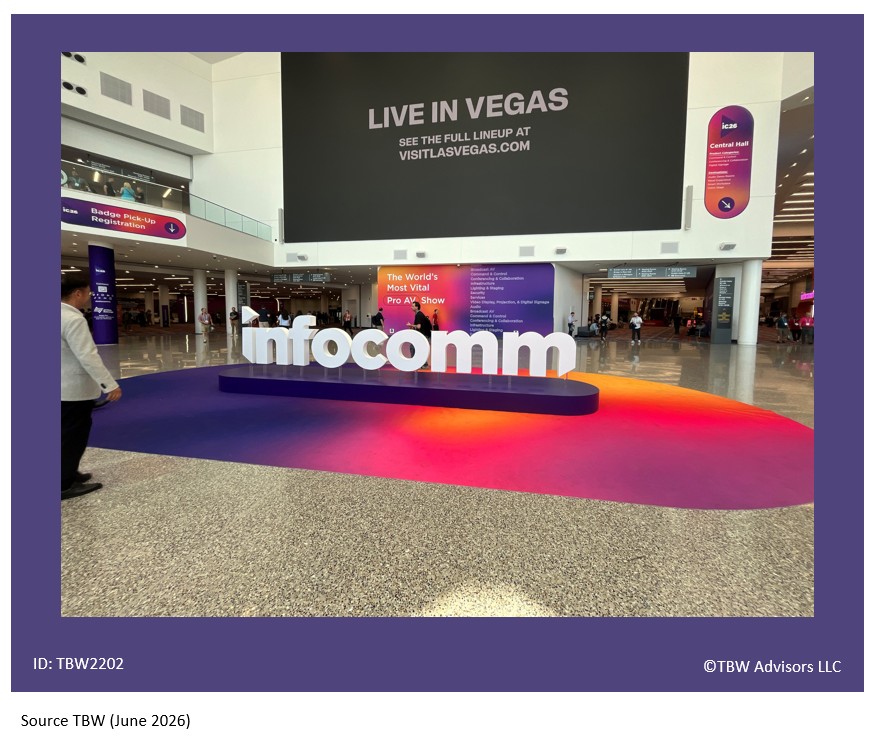
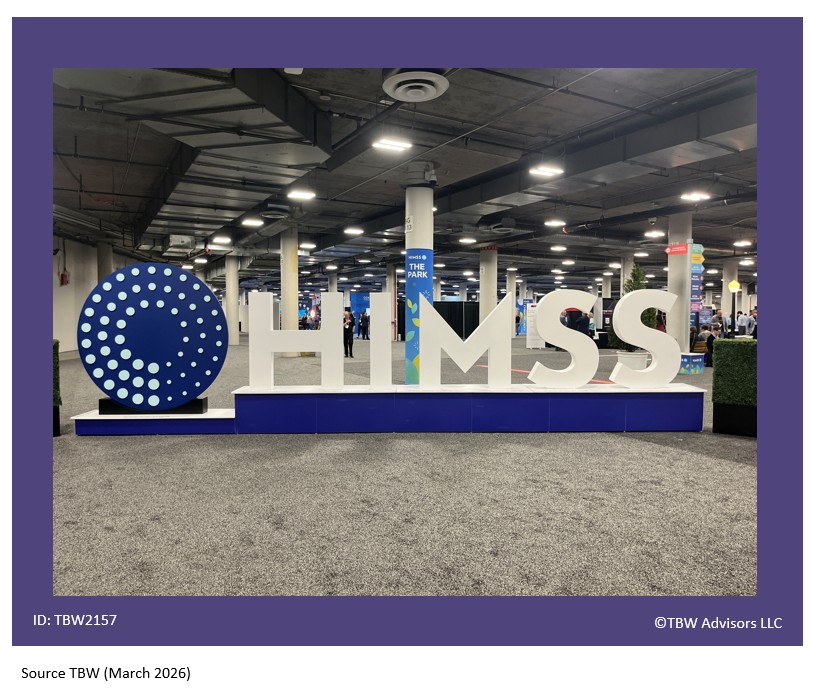
Tag: HIMSS

  • Industry Whispers: AI in Medicine: Promise or Peril?

    Industry Whispers: AI in Medicine: Promise or Peril?

    oin us for “AI in Medicine: Promise or Peril?”—a candid discussion with leading experts on how artificial intelligence is reshaping healthcare. From groundbreaking diagnostic tools to ethical dilemmas and patient safety concerns, we’ll explore whether AI is the ultimate game-changer or a ticking time bomb. Gain insights into what’s real, what’s hype, and what’s next for medical innovation. Don’t miss this chance to separate fact from fiction and prepare for the future of healthcare.

    Research Code: TBW2129

    Cannot make it live? Register and submit your question. The answer will be in the video on TBW Advisors’ YouTube Channel.

    NO AI note takers allowed. Event copyrighted by TBW Advisors LLC All Rights Reserved.

    BIOS

    Doreen Galli, PhD MBA

    Doreen Galli, PhD MBA is the Chief of Research at TBW Advisors LLC and regular contributor to Computer Talk Radio. She’s led significant and measurable changes as an executive at IBM, DPWN, Dell, ATT, and most recently Microsoft. Dr Galli was Chief Technology and Chief Privacy Officer in Azure’s MCIGET. Gartner recognized Dr. Galli as an expert in data ingestion, quality, governance, integration, management, and all forms and analytics including sensor data.

    Barry P. Chaiken, MD, MPH

    Barry P. Chaiken, MD, MPH is a physician, public health specialist, and internationally recognized expert in healthcare AI, clinical informatics, and digital transformation. Trained at SUNY Downstate Medical Center and the Harvard School of Public Health, Dr. Chaiken previously worked with the U.S. Centers for Disease Control and Prevention, experience that informs his expertise in public health analytics, system-level strategy, and the design of resilient, data-driven healthcare systems.

    A former Chairperson of the Healthcare Information and Management Systems Society (HIMSS), he has served as a strategic advisor to healthcare IT companies, life sciences organizations, and health systems worldwide. Dr. Chaiken is the author of Future Healthcare 2050 and Navigating the Code, and is a leading keynote speaker on AI, trust, clinician workflow, and patient experience.

    A two-time cancer survivor and 41-year rider in the Pan-Mass Challenge, Dr. Chaiken brings a unique perspective that connects clinical knowledge, policy insight, and human experience.

    Susie Branagan BSN,RN

    Susie Branagan is a highly experienced nurse and healthcare leader whose career spans 25 years of ICU, pediatric psychiatry, adult medical-surgical care, telemetry, perioperative services, and hospital leadership. She has served in roles from frontline clinician to Nurse Manager, gaining a deep understanding of patient care, caregiver well-being, and the operational realities that shape healthcare systems.

    As the founder of Susie Branagan Consulting, Susie specializes in trauma-informed care, Just Culture principles, leadership development, communication strategies, and building safe, supportive care environments. She helps teams strengthen accountability, improve psychological safety, and respond to challenging situations with clarity, compassion, and evidence-based practice.

    What sets Susie apart is that everything she teaches comes directly from real-life experience, not from textbooks or theory. Her coaching, trainings, and leadership support are grounded in decades of navigating complex cases, supporting distressed families, advocating for staff, and leading teams through high-pressure clinical moments.

    Susie’s mission is to transform healthcare culture by empowering leaders and caregivers with practical, human-centered tools that create safer, stronger, more resilient organizations.

    Chris Hutchins

    Chris Hutchins is the Founder & CEO of Hutchins Data Strategy, a consultancy that helps healthcare organizations unlock the value of data, AI, and analytics with clarity, ethics, and measurable impact. A nationally recognized voice in healthcare transformation, Chris previously served as SVP and Chief Data & Analytics Officer at LifePoint Health, and prior to that, as Chief Data & Analytics Officer at Northwell Health, New York’s largest integrated delivery network.

    Over the past two decades, Chris has led enterprise-wide initiatives in self-service analytics, ambient AI, digital governance, and workforce enablement, always with a sharp focus on care equity, operational sustainability, and trust. His leadership is grounded in building practical, inclusive strategies that bring technologists, clinicians, and operators into shared alignment.

    Chris is also the creator and host of The Signal Room, a podcast platform amplifying leadership, ethics, and innovation in health. He is a frequent contributor to CDO Magazine, HIMSS, and other national forums, where he advocates for AI adoption that augments human care, not replaces it.

    Chris holds a deep belief that every data strategy is ultimately a human strategy, and that transformation only succeeds when it is designed with care at the center.

    *When vendors’ names are shared as examples in this document, it is to provide a concrete example of what was on display at the conference, not an evaluation or recommendation. Evaluation and recommendation of these vendors are beyond the scope of this specific research document. Other example products in the same category may have also been on display.

    TBW Advisors LLC logo

    Corporate Headquarters

    2884 Grand Helios Way

    Henderson, NV 89052

    ©2019-2025 TBW Advisors LLC. All rights reserved. TBW, Technical Business Whispers, Fact-based research and Advisory, Conference Whispers, Industry Whispers, Email Whispers, The Answer is always in the Whispers, Whisper Reports, Whisper Studies, Whisper Ranking, The Answer is always in the Whispers, and One Change a Month, are trademarks or registered trademarks of TBW Advisors LLC. This publication may not be reproduced or distributed in any form without TBW’s prior written permission. It consists of the opinions of TBW’s research organization which should not be construed as statements of fact. While the information contained in this publication has been obtained from sources believed to be reliable, TBW disclaims all warranties as to the accuracy, completeness or adequacy of such information. TBW does not provide legal or investment advice and its research should not be construed or used as such. Your access and use of this publication are governed by the TBW Usage Policy. TBW research is produced independently by its research organization without influence or input from a third party. For further information, see Fact-based research publications on our website for more details.

  • Whisper Report: How can telemedicine be optimized to improve patient care?

    Whisper Report: How can telemedicine be optimized to improve patient care?

    Published to clients: September 2, 2025                              ID: TBW2064

    Published to Readers: September 3, 2025

    Published to Email Whispers: October 27, 2025

    Public with Video Edition:  October 27, 2025

    Analyst(s): Dr. Doreen Galli

    Photojournalist(s): Dr. Doreen Galli

    Abstract

    This report explores how telemedicine is evolving beyond convenience to deliver deeper, more personalized care. From AI-powered test result interpretation to seamless appointment coordination and continuity across care settings, experts at HIMSS25 reveal how digital tools are reshaping the patient journey. Discover how telemedicine can close access gaps, enhance understanding, and support long-term health outcomes—if systems are designed with the full patient lifecycle in mind.

    Target Audience Titles:

    • Chief Information Officer, Chief Medical Officer, Chief Data Officer, Chief Digital Officer, Chief Innovation Officer, Chief Patient Officer
    • Clinical Informatics Specialists, Telehealth program manager, Health IT Architect, Clinical Data Analyst, Biomedical Engineer, AI/ML Engineer (Health Focus), Patient Engagement Strategists, Virtual Care Coordinator

    Key Takeaways

    • AI-enhanced telemedicine can streamline appointment booking, interpret test results, and personalize care recommendations—improving speed, clarity, and access for patients.
    • Continuity of care is the next frontier—integrating telemedicine across acute, post-acute, and home health settings to support the full patient journey.
    • Access equity improves when telemedicine includes specialists and reaches underserved populations, addressing socioeconomic and geographic barriers.
    • Patient understanding is amplified when generative AI explains results and next steps in context, reducing confusion and improving engagement.
    Strategy of 4, technical depth of 2


    How can telemedicine be optimized to improve patient care??

    We took the most frequently asked and most urgent technology questions straight to the health systems technology experts gathering at the Healthcare Information and Management Systems Society (HIMSS) 2025 Global Health Conference and Exhibition or HIMSS25 for short. This Whisper Report addresses the question regarding how can telemedicine be optimized to improve patient care? Figure 1 depicts two patient care optimizations one can expects from telemedicine.

    Two benefits of Telemedicine
1. Patient Experience
2. Continuity of Care

    Patient Experience

    The first benefit many expect to experience with telemedicine is the patient experience. For example, when getting test results, AI can be leveraged for the benefit of the patient to find a doctor. As Aisera’s Daniel Caravajal suggest, “I get my test results it can recommend me doctor that’s specific on that area right and it can book the appointment right it can coordinate the calendars and basically made that experience a lot faster a lot seamless and easier to kind of interact with.” Caravajal further suggests AI can help the patient understand the results. “let’s say you get your test results. We can analyze them and give you suggestions that is the unique part about a genetic AI is not only delivering a unique use case but it’s also understanding the situation. It’s understanding the intent and making further suggestions.” Valuable to note that it is always best to confirm any such information with your actual practitioner! MinttiHealth’s Xiaoqian Zou suggests telemedicine technology can, “give everyone access to the easy health care solution and service.”

    Continuity of Care

    A critical part of the patient experience that also affects the medical care is that of continuity of care.

    As Alexander Group’s Tray Chamberlin advised, “what we think is probably the next evolution in tele medicine is that continuity of care where you’re really thinking about a patient across the entire life cycle be it acute to Post Acute to maybe even home health and integrating that tele medicine it more so that the date and Records can still communicate and we understand the holistic patient Journey.” The significant benefit of telemedicine as Chamberlin further observed, “we’re also meeting the patient where they are and so you know the inclusion of specialists in telemedicine certainly just from a socioeconomic perspective getting access to the right populations that traditionally maybe don’t have access.” For additional background on the benefits and current state of telemedicine, see the Press Conference for OnMed from CES.

    Related playlists

    1. Whisper Report: How can AI be effectively integrated into healthcare systems?
    2. Conference Whispers: HIMSS 2025
    3. OnMed Press Conference

    *When vendors’ names or quotes are shared as examples in this document, it is to provide a concrete example of what was on display at the conference or what we heard doing our research, not an evaluation or recommendation. Evaluation and recommendation of these vendors are beyond the scope of this specific research document.  

    TBW Advisors LLC Logo

    Corporate Headquarters

    2884 Grand Helios Way

    Henderson, NV 89052

    ©2019-2025 TBW Advisors LLC. All rights reserved. TBW, Technical Business Whispers, Fact-based research and Advisory, Conference Whispers, Industry Whispers, Email Whispers, The Answer is always in the Whispers, Whisper Reports, Whisper Studies, Whisper Ranking, The Answer is always in the Whispers, and One Change a Month, are trademarks or registered trademarks of TBW Advisors LLC. This publication may not be reproduced or distributed in any form without TBW’s prior written permission. It consists of the opinions of TBW’s research organization which should not be construed as statements of fact. While the information contained in this publication has been obtained from sources believed to be reliable, TBW disclaims all warranties as to the accuracy, completeness or adequacy of such information. TBW does not provide legal or investment advice and its research should not be construed or used as such. Your access and use of this publication are governed by the TBW Usage Policy. TBW research is produced independently by its research organization without influence or input from a third party. For further information, see Fact-based research publications on our website for more details.

  • Conference Whispers: Black Hat USA 2025

    Conference Whispers: Black Hat USA 2025


    Las Vegas, NV August 2- August 7

    Published to clients: August 11, 2025                                 ID: TBW2089

    Published to readers: August 12, 2025                  

    Published to Email Whispers: TBD

    Public with video edition: TBD

    Analyst(s): Dr. Doreen Galli

    Photojournalist(s): D. Doreen Galli

    Abstract:

    After 61 videos including 4 first ever onsite livestreams, 150 minutes of recording including multiple exclusive shots – our coverage of Black Hat USA 2025 closes. Black Hat USA 2025 featured over 100 briefings and 120 sponsored sessions, with coverage spanning keynote presentations, technical sessions, and exhibit hall innovations. Topics ranged from AI-driven threat detection and agentic SOC platforms to identity verification and proactive risk management. Trends in cybersecurity regarding defence, use of AI agents, and focus on resiliency continue to grow.

    The Conference

    • Black Hat USA 2025 featured over one hundred briefings and 120 sponsored sessions. Attendance numbers are forthcoming. 2024’s edition featured over 20,000 in person attendees.

    Cautions

    • Black hat is not a conference to attend without preparation. All of one’s technology should be up to date. One should ensure they are leveraging a VPN and a RDID wallet when intentionally going around black hat. If not using one’s phone, a portable faraday pouch is always beneficial.
    • Friendly reminder: this research provides examples of what was shared with us at the event, not an evaluation, validation, or recommendation of the given technology.
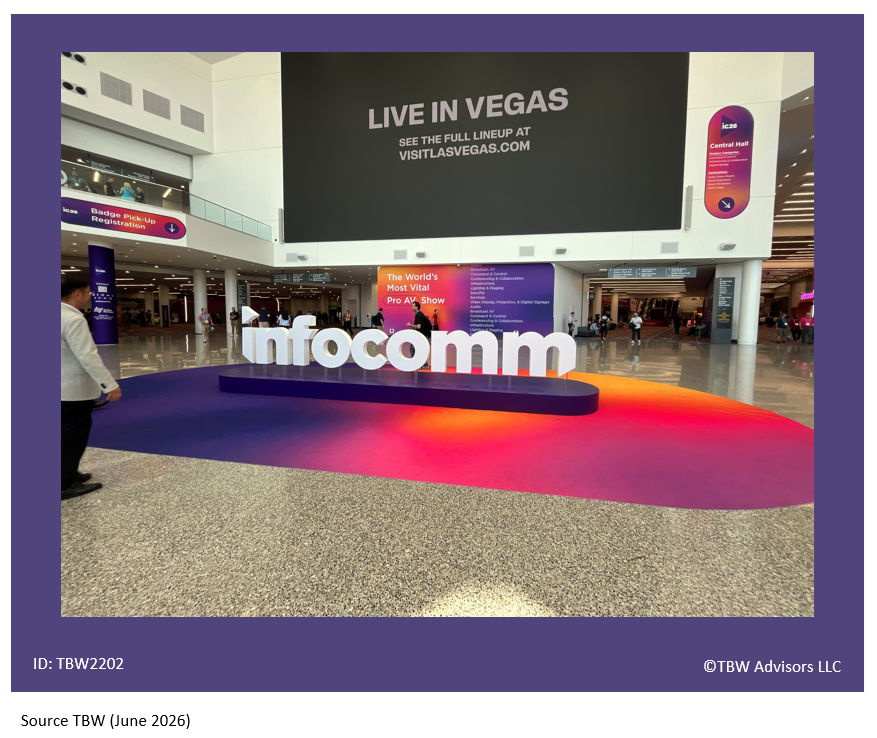
    Conference Vibe

    After 61 videos and related fact checks, over 150 minutes of recording including for the first time ever – four onsite LIVESTREAMS – our coverage of Black Hat USA 2025 closes. Black Hat featured over one hundred briefings and 120 sponsored sessions. Clients may recall the expo hall restrictions during our coverage of HIMSS which treated the entire expo hall like a surgical operating room from a privacy perspective. Guess what? It was even tighter at Black Hat. Nonetheless, we were able to capture the energy as Expo Hall was opening. Not only that, for the first time ever, Informa (who owns Black Hat) gave permission to someone to do a walkabout in Expo Hall prior to its opening for the day. That’s right – enjoy your exclusive look at Black Hat USA 2025 Expo Hall. Not only that, we were able to capture the mouthwatering lunch served on Wednesday. Once again, unlike most events, the What’s To Eat? Video does not include any attendees enabling us to really get a great shot of the food! A first for TBW Advisors LLC – we did four livestreams while on site. One live stream on Tuesday, Wednesday, and Thursday morning. One final livestream went out on Thursday as I requested assistance on your favorite videos for my segment on the August 9th broadcast edition of Computer Talk Radio.

    While at Black Hat USA 2025, we conducted research for three additional forthcoming Whisper Reports for our clients. The playlists are unlisted but available and will eventually fill in with the video version of the report so you may wish to bookmark these playlists.

    1. Whisper Report: What’s the biggest cybersecurity myth in 2025?
    2. Whisper Report: Can AI defend against AI-powered attacks?
    3. Whisper Report: What’s the next SolarWinds-level breach waiting to happen?

    Readers and viewers wishing to experience the entire event are encouraged to view the Conference Whispers: Black Hat USA 2025 Playlist in its entirety. Once the video edition is available, the playlist will be sited as a pinned comment on the video edition. It is also easy to locate any previous Conference Whispers playlists through TBW Advisors LLC corporate website. Additional cybersecurity conference research is available via Conference Whispers: Identiverse and Conference Whispers: ISC West.

    Keynotes and Sessions

    Kicking off in dramatic fashion, the conference kicked off with an amazing keynote from non-other than the most famous virus hunters – Mikko Hypponen and father of the Hypponen law of IoT security – one of our favorite coverage spaces. Specifically, Mikko said that if a device is smart, it is vulnerable. It was amazing to hear his story.

    On the bleeding edge of things, we received two session summaries from Microsoft’s Thomas Roccia. The first session was his Black Hat session on NOVA – Prompt Pattern Matching regarding a new type of threat gaining traction. The second session is actually at DEFCON – the sister conference where no one would be ignorant enough to bring in modern technology outside of a faraday cage. Fortunately, we caught Thomas while at Black Hat. IN this talk Thomas shared that they are releasing an AI Agent to track crypto currency’s movements including visualization to combat crypto money laundering. The final Microsoft session itself that we captured is the Unmasking of Cyber Villains. I always love when engineers get a very loud boastful ovation from the audience. This stage featured the heroes of MISTIC and Dart who shared how they leverage each other’s strength. MISTIIC stands for Microsoft Threat Intelligence Center while Dart stands for Microsoft’s Diagnostics and Recovery Toolset. In this session, the Microsoft team emphasized that incidents require empathy, speed, and precision. The Darth team is on the ground delivering the empathy and getting the data to MISTIC. MISTIC in turn, provides the cheat codes to the Darth rescue team to quickly combat the incident.

    On the topic of using AI Agents on a team of humans in wish SOC, James Spiteri from Elastic Security shared a summary of his session. “AI without Borders: Extending analysts capabilities in a modern Soc” dove into details how Agents and humans can successfully interoperate in a SOC. James also covered critical questions you need to think about in order to truly operationalize this type of situation. 

    Exhibits

    As with many events, some exhibits span outside of the formal expo hall. We were invited to the Dune Security Command Center on site where we heard about their solution. Their adaptive training uses a personal credit risk scoring model. It targets each employee’s risky actions and knowledge gaps with customized, targeted, proactive program. The goal is to elevate them to meet corporate standards. This theme of preparation, training, and doing things up-front was definitely a theme. Cumulated shared how their solution focuses on resiliency. Given that the proper way to discuss it is always when and not if, it is wise to ensure a quick recovery when it occurs. This preparation and looking out for the threat aligned with Qualys’s Risk Operations Center. This center is focused on assisting organization proactively identify, prioritize, and finally remediate identified risks. Covering all five personas in a SOC (alerts, vulnerabilities, threat intel, case management and DFIR (digital forensics/incident response )) StrikeReady’s platform integrates with 800 tools and is focused on removing each role’s pain points. Continuous Threat Exposure Management or CTEM is the area addressed most recently by Safe Security. Booli also moves things earlier in the process, in their case identity stitching. Specifically at the very beginning of the process including score carding the identity and providing the information back to the identity service. Ensuring stolen credentials are changed once they have been phished and the criminals attempted to leverage them, Mokn was on site to tell attendees about their solution.

    If your organization would prefer to fix vulnerabilities instead of the common security software composition analysis, Heeler Security was the booth to visit. Feeling overwhelmed, by cloud configurations in your organization? imPac Labs was on site talking about their expertise. Admittedly, given my Microsoft Patent application on Policy Profiles, cloud configurations is a problem space on our radar at TBW Advisors. Speaking of high availability environments, HAProxy Technolog exhibited their platform that brings enterprise security performance and configurability into packaged software.

    An area we have discussed in Conference Whispers: Money 20/20, Conference Whispers: HIMSS 2025, and Conference Whispers: Fintech Meetup 2025 – verifying the hardware device is a valuable defence vector for fighting fraud. At Black Hat USA 2025 we met SmallStep that enables device identity with cryptographic identity ensuring corporate devices are used to perform work. Leveraging device identification to eliminate deepfakes within a corporation, Netarx leverages multiple models to ensure your corporate communications are safe from deep fakes. Elastic Search – an open-source project known for search – found itself building native security and analytics due to popular demand.

    Moving into the agentic side of things, Microsoft’s AI Agent Challenge was a big hit. Their booth had plenty of specialists on site to answer any of your questions. Focusing exclusively on AI Agents for the Red Team, Mindgard’s solution keeps probing to find vulnerabilities, filters through them based on your target and context. Finally, remediation advise is dispensed. Cyata built a built a control plane for Agentic Identity and includes policy enforcement. Addressing the full lifecycle above and beyond triage, Exaforce shared their Agentic SOC Platform. A demo of Exaforce was also captured. Finally, if you are unfamiliar with the current state of agents or have never seen an agent in action, enjoy the video with Ralph. Ralph comes from Cyber Innovate; a think tank focused on stopping threats from AI Agents themselves.

    Next Year’s Conference  

    Black Hat USA 2026 will once again return to Las Vegas and will be held at Mandalay Bay Convention Center in August 2026. The exact dates have yet to be announced at time of publication.

    *When vendors’ names are shared as examples in this document, it is to provide a concrete example of what was on display at the conference, not an evaluation or recommendation. Evaluation and recommendation of these vendors are beyond the scope of this specific research document. Other examples products in the same category may have also been on display.

    TBW Advisors Logo

    Corporate Headquarters

    2884 Grand Helios Way

    Henderson, NV 89052

    ©2019-2025 TBW Advisors LLC. All rights reserved. TBW, Technical Business Whispers, Fact-based research and Advisory, Conference Whispers, Industry Whispers, Email Whispers, The Answer is always in the Whispers, Whisper Reports, Whisper Studies, Whisper Ranking, The Answer is always in the Whispers, and One Change a Month, are trademarks or registered trademarks of TBW Advisors LLC. This publication may not be reproduced or distributed in any form without TBW’s prior written permission. It consists of the opinions of TBW’s research organization which should not be construed as statements of fact. While the information contained in this publication has been obtained from sources believed to be reliable, TBW disclaims all warranties as to the accuracy, completeness or adequacy of such information. TBW does not provide legal or investment advice and its research should not be construed or used as such. Your access and use of this publication are governed by the TBW Usage Policy. TBW research is produced independently by its research organization without influence or input from a third party. For further information, see Fact-based research publications on our website for more details.
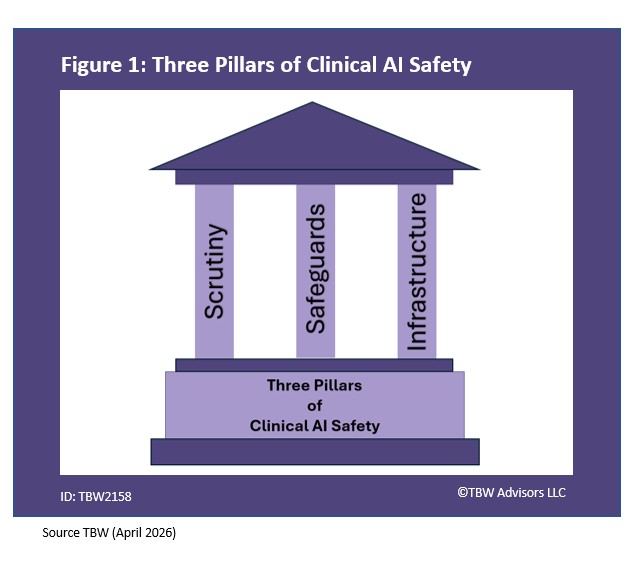
  • Whisper Report: What are the best practices for enhancing cybersecurity in healthcare?

    Whisper Report: What are the best practices for enhancing cybersecurity in healthcare?

    Whisper Report: What are the best practices for enhancing cybersecurity in healthcare?

    Published to clients: June 18, 2025                                                ID: TBW2063

    Published to Readers: June 19, 2025

    Email Whispers: July 22, 2025

    Public & Video Edition: July 23, 2025

    Analyst(s): Dr. Doreen Galli

    Photojournalist(s): Dr. Doreen Galli

    Abstract:

    Cybersecurity in healthcare is responsible for protecting the data that represents the life’s story of patients and infrastructure to enable proper care. Managing and securing the plethora of edge devices and the interoperability of all the technologies is an increasing challenge. There are four steps to take to enhance your healthcare cybersecurity: select a framework, leverage depth in defense, automate where possible, and test your environment.

    Target Audience Titles:

    • Chief Information Security Officer, Chief Information Officer, Chief Security Officer, Chief Technology Officer, Chief Compliance Officer, Chief Data Officer, Chief Privacy Officer
    • VP of Cybersecurity, Director of Information Security
    • Security Architect, Information Security Architect, Network Security Engineer, Systems Security Engineer, SOC Analysts, IAM Specialists, Director of Privacy

    Key Takeaways

    • Device maintenance and interoperability continue to challenge healthcare environments cybersecurity.
    • Four steps to enhance cybersecurity in healthcare environments. Select a framework, leverage depth in defense, automate where possible, and test your solution.

    Tags

    cybersecurity, privacy, healthcare, healthcare technology, health tech, HIMSS, HIPPA, medical devices, edge devices, IoT, depth in defense, automate, integration, cybersecurity frameworks, Evidently, Hal Wolf, Kai Romero, Brennen Reynolds, Absolute Security, Alexander Group, Trey Chamberlin, Aisera, Daniel Carvajal Marin

    What are the best practices for enhancing cybersecurity in healthcare?

    We took the most frequently asked and most urgent technology questions straight to the health systems technology experts gathering at the Healthcare Information and Management Systems Society (HIMSS) 2025 Global Health Conference and Exhibition or HIMSS 25 for short. This Whisper Report addresses the question regarding the best practices for enhancing cybersecurity in healthcare. Given that data breaches in 2024 affected 1 in 2 American’s health records, cybersecurity is top of mind in healthcare1. But healthcare data is not your shopping data, it represents much more. As Evidently’s Kai Romero shared, “the narrative Arc of who they are how they’ve suffered, how they’ve overcome the illnesses that they’ve experienced, you can’t treat that lightly … this is their life.” But there is a reason for concern in healthcare. For those unfamiliar, Russia has been found the source of ransomware attacks on the healthcare industry2. As HIMSS Hal Wolf shared, “security is a major issue our own the federal government the United States just announced that they were bringing down cyber security blockage or fundamentals against another foreign country recently that was yesterday.” There is no indication that the cyberattacks on healthcare will stop, just an announcement that the government is no longer stopping such attacks.

    Where are the vulnerabilities?

    Understanding that healthcare data represents the whole person and their life, where are the vulnerabilities coming from in the healthcare environment? Examining the source of the security vulnerabilities can offer insights to the efforts to defend and protect this valuable healthcare data. Turns out there are two large sources of vulnerabilities.

    Device Maintenance

    First, devices in the healthcare environment itself are an issue. As we discussed in Whisper Report: How can AI be effectively integrated into healthcare systems?, many devices on site are old. They may not have over the air (OTA) updates, may require human in the loop to update. As Absolute Security’s Brennen Reynolds stated, “any given organization that man that has our technology about 15% of the devices that are being manually managed have some missing critical security control which increases their risk to either an operational outage or a cyber event like Ransomware.” It may sound like simple advice you have heard a million times, but keeping your equipment up to date with the latest software and security patches is simply critical.

    Interoperability

    Healthcare creates complicated environments full of an array of diverse vendors. Somehow these vendors and their technology – or more specifically – the diverse array of data about the patient derived must interoperate. Not just interoperate, the data must come together to provide a picture of the patient for the practitioner. Unfortunately, as Alexander Group’s Tray Chamberlin pointed out, “a lot of interoperability issues and leaks.” Getting the technology to work together is so difficult in and of itself, the process created that ‘works’ may not be a secure solution. It is critical that during any interoperability project that protection of the data in the processes is the first a priority. Furthermore, the integration architecture and solution must      be examined at a detailed level to understand and identify any potential leakages created in the process.

    Solutions

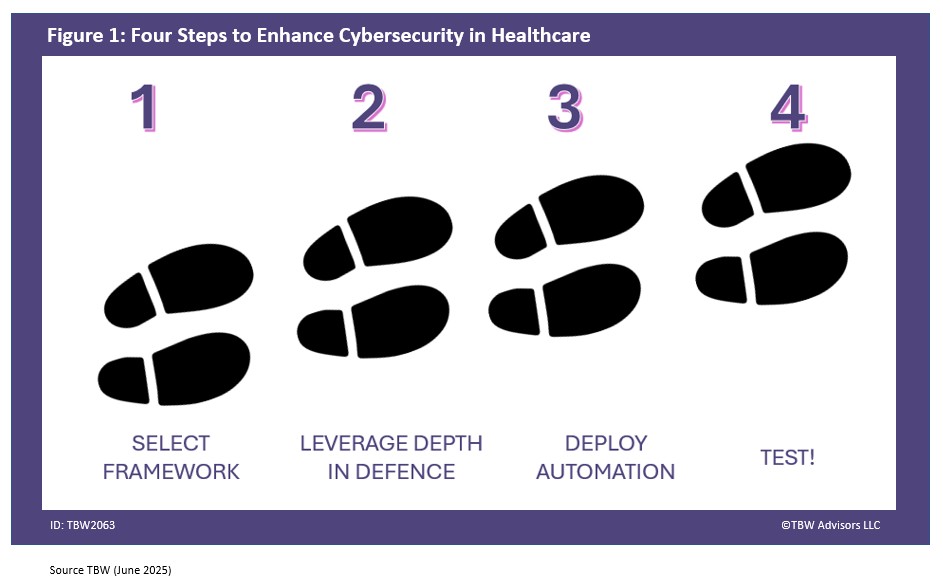
    Organizations concern about security in healthcare technology is not going to go away. Per HIMSS’s Hal Wolf, “this is going to be the coinage of which we really improve Healthcare is information (and) information comes from data the data will be unprotected so .. it is why it (cybersecurity) is one of our (HIMSS) four focus points.. at HIMSS (25) digital Health transformation, AI, cyber security, and Workforce Development.” Information is how we improve care, thus information is the goldmine of healthcare. Figure 4 depicts Four Steps to Enhance your Healthcare Cybersecurity.

    4 steps to enhance healthcare cybersecurity 1. Select Framework
2. Leverage Depth of Defense
3. Deploy Automation
4. Test!

    Select Framework

    Through the various conversations while conducting this research, it became very clear that each organization has their own framework to guide their cybersecurity program. When selecting amongst the frameworks, ensure these common characteristics are present.

    • It should be 100% restricting while enabling productivity.
    • Needs guardrails and controls
    • It should be deliberate and intentional with how it handles your assets.

    Leverage Defense in Depth

    Regardless of where the technology is used within healthcare, certain security practices should be consistent. As Evidently’s Kai Romera shared, “some of the same things that we use in the clinical setting to protect patient data whether that’s logging out of a screen pretty quickly after it’s not active or you know taking away the protected patient information so that anyone who’s looking at the screen would not know who that patient was you want to know that they’re employing those things because this (is) patient data.” Understanding no single method covers all scenarios, it is good to use every method available when possible. For example, clinical data masking technology and standards can easily be applied to the terminals used at the front desk and billing as well.

    But data masking is not just useful at the terminal level. As Aisera’s pointed out, regarding you agentic AI solutions, we can do everything from masking PII for mask any personal data “architecture that’s going to keep your data private data privacy is probably the most important thing especially when it comes to healthcare right .. but also how it is stored right even in our cloud approach” our customers get the unique architecture so when you’re training the LLM you’re not trained in our models.”

    Deploy Automation

    Many shy away from automation, but as we pointed out in Conference Whispers: Black Hat USA 2019, a ransom ware attack can take down an organization in 30 minutes. What human on call can get notified, get online and stop an attack that fast? Furthermore, as Absolute Security’s Brennan Reynolds shared, “topic of automation there’s just too many things to be done in a day to allow and require humans to be doing all of the maintenance and management task so if the it devices across their organizations whether you have a th000 devices 10,000 or a million devices you’re never going to have enough staff to manually execute tasks to keep those devices safe and secure.” Thus it is physically impossible to stop many attacks or even simply update all the devices on site without automation.

    Test!

    Regardless of the care taken, it important to review the architecture and test the system. As Alexander Group’s Tray Chamberlin explained, “make sure that it’s not just we want this system we want to stand it up and we want the functionality but also going through the paces and testing and making sure that is playing nice but also doesn’t open up a new vulnerability within your system going forward.” A system that simply works is not the goal. Rather, a system must work and be secure, resilient, and hardened against attacks including its integration points is the minimum standard.

    We will close with remarks by HIMSS’s Hal Wolf, “ I think cyber security is going to continue to be at the Forefront of our thoughts whenever you’re dealing with data and information they are going to be bad actors… HIMSS is focused on cyber security we have cyber security forums (and) there are cyber security events taking place.”

    *When vendors’ names or quotes are shared as examples in this document, it is to provide a concrete example of what was on display at the conference or what we heard doing our research, not an evaluation or recommendation. Evaluation and recommendation of these vendors are beyond the scope of this specific research document.

    Related playlists

    1. Whisper Report: HIMSS: Question 1: How can AI be effectively integrated into healthcare systems??
    2. Conference Whispers: HIMSS 25

    Corporate Headquarters

    2884 Grand Helios Way

    Henderson, NV 89052

    ©2019-2025 TBW Advisors LLC. All rights reserved. TBW, Technical Business Whispers, Fact-based research and Advisory, Conference Whispers, Industry Whispers, Email Whispers, The Answer is always in the Whispers, Whisper Reports, Whisper Studies, Whisper Ranking, The Answer is always in the Whispers, and One Change a Month, are trademarks or registered trademarks of TBW Advisors LLC. This publication may not be reproduced or distributed in any form without TBW’s prior written permission. It consists of the opinions of TBW’s research organization which should not be construed as statements of fact. While the information contained in this publication has been obtained from sources believed to be reliable, TBW disclaims all warranties as to the accuracy, completeness or adequacy of such information. TBW does not provide legal or investment advice and its research should not be construed or used as such. Your access and use of this publication are governed by the TBW Usage Policy. TBW research is produced independently by its research organization without influence or input from a third party. For further information, see Fact-based research publications on our website for more details.

  • Conference Whisper: Identiverse 2025

    Conference Whisper: Identiverse 2025

    Published to clients: June 10, 2025                                       ID: TBW2083

    Published to readers: June 11, 2025                      

    Published to Email Whispers: August 18, 2025

    Publicly Published with video edition: August 18, 2025

    Analyst(s): Dr. Doreen Galli

    Photojournalist(s): D. Doreen Galli

    Abstract:

    Identiverse 2025 welcomed 3,300+ attendees to Mandalay Bay – nearly a 20% gain over 2024. Featuring 250+ sessions and 150 exhibits all on one floor, the event was smooth and accessible. Keynotes and sessions emphasized teamwork, resilience, and collaboration, while exploring AI in identity, decentralized credentials, and zero-trust implementation. Exhibitors showcased innovations from selfie-based authentication to intelligent access control and secrets vault cleanup. The shift from Aria to Mandalay Bay marked a new chapter for the expanding event, which returns to Mandalay Bay in 2026.

    The Conference

    • Identiverse 2025 was held at Mandalay Bay Convention Center, a move from Aria in 2024. It hosted 3300 attendees, 250 sessions and 150 exhibitors.

    Cautions

    • Friendly reminder: this research provides examples of what was shared with us at the event, not an evaluation, validation, or recommendation of the given technology.

    TAGS

    Identiverse 2025, digital identity, identity security, zero trust, AI in cybersecurity, decentralized identity, verifiable credentials, identity governance, privileged access management, IAM, IGA, cybersecurity conference, Mandalay Bay, authentication, biometrics, secrets management, SSO, MFA, ITDR, access control, enterprise security, digital trust, identity trends, identity innovation, conference highlights, tech expo, identity tech, identity solutions, cybersecurity trends, identity keynote, identity management

    Conference Vibe

    After over 53 videos, almost 200 minutes of content only 2 escalator rides, 30,000 steps and over 25 fact checks, our coverage of 2025 Identiverse ends. The event spanned 4 days, had over 250 speakers, 150 exhibits and with over 3300 attendees – 700 more registered over last year. Registration went very smooth with rarely any waiting time. Interestingly, we were informed many registered late. Executives realize that reducing risks and therefore related losses is a viable path to protecting profits in uncertain times. This year’s event took place at Mandalay Bay Convention Center, a change from Aria last year. Most enjoyed the conference taking place all on the same floor. It was great to see the conference grow and expand. Like all changes, there were the old timers yearning for the days when they all packed into too small rooms at Aria. Unfortunately, some of the sessions located physically further from Expo Hall reported some in person attendance challenges from those too tired to walk to the room. The event featured a full collection of meals. We were able to capture the Tuesday Seminar’s Lunch and the lunch on Wednesday in Expo Hall.

    While at Identiverse, we conducted research for three additional forthcoming Whisper Reports for our clients. The playlists are unlisted but available and will eventually fill in with the video version of the report so you may wish to bookmark these playlists.

    1. Whisper Report: How can organizations implement zero-trust security without disrupting user experience?
    2. Whisper Report: What are the latest advancements in decentralized identity and verifiable credentials?
    3. Whisper Report: How can AI and behavioral analytics enhance identity security?

    Readers and viewers wishing to experience the entire event are encouraged to view the Conference Whispers: Identiverse Playlist in its entirety. Once the video edition is available, the playlist will be sited as a pinned comment on the video edition. It is also easy to locate any previous Conference Whispers playlists through TBW Advisors Website under Subscribers research/Conference Whispers.

    Keynotes and Sessions

    Identiverse is absolutely one of those events where regardless of the amazing session you choose, you are aware you are also missing an incredible session – or two. Fear of missing out was rampant. Fortunately, we were able to capture 53 videos for our clients and subscribers. The first Keynote featured John Pritchard, CEO of Radiant Logic. Titled, “Identity isn’t a solo Game” it drove home the message that one cannot succeed in identity without collaboration with the professionals around you throughout the organization and with others in the industry.

    Another frequently referred to keynote featured the UK’s Hanna Rutter who is realizing their government digital identity solution. In her talk she spoke about the challenges of such a decentralized digital identity solution and how she is overcoming roadblocks on her path to success. A much in demand topic regarding identity challenges in the realm of AI was presented by Richard Bird. A tech talk held in the expo hall was hosted by Microsoft. Their tech talk covered the hot topic of ITDR, Identity threat detection and response.

    Exhibits

    Identity is a topic found not only in the expo halls of Identiverse, but was also seen in the halls of HIMSS, Fintech Meetup, Money 20/20 and ISC West just to name a few. What is interesting is the different manners of vendors describe their technology. At ISC West, vendors in the expo hall spoke in terms of a solution. They would always emphasize the PII information is not on the badge, rather a hash of the biometric data which enables verification is provided instead. While this was not clarified on the videos at Identiverse, the vendors later disclosed the same technical approach that was taken on the technology captured at Identiverse. If you are seeking a tap-in to sign-in on a shared device for your organization, Imprivata was in the expo hall with their solution. If you would like to verify the customer requesting the high-risk transaction is the same customer who signed up for the account, Panani shared their technology. Keyless offers a solution to authenticate high risk actions with a selfie. If you are an engineer developing a solution and need the capability to onboard customers, no need to start at square one! PropelAuth provides an out of the box identity capability you can add on to your solution to onboard customers! Seeking to manage your remote teams and seeking a cost effective out of the box solution to provide SSO and MFA? Cubeless shared their free and easy SSO and MFA solution made for you. 

    Is managing privileges gotten to be too much for you and your organization? Apono Unified Access Management is an intelligent solution that aims to provide just enough just in time privilege for human and non-human-identities (NHI). Oasis goes one step further in managing AI Agents’ Identity, provisioning, deprovisioning and cleaning up stale accounts. Are your coders overwhelmed trying to identity what secrets vault to use so they land up hardcoding the secret? Is your organization suffering from identity vault sprawl? GitGuardian was on hand with their solution that can assist you in identifying and remediating secrets vault sprawl.

    Expo hall also featured quite a few IGA (identity governance and administration) and PAM (privileged access management) platforms. Omada captured their 25-years’ IGA experience into a free best practice framework. This framework includes use cases and related configuration recommendations for their platform, Omada Identity Cloud. Lumos shared their agentic AI autonomous IGA solution. This solution can even recommend what privileges a new employee should get based on their role and department. If you have a small but complex environment, Clarity Security has an IGA solution targeted at your organization.

    Keeper Security shared their zero-knowledge identity solution for endpoints. Their solution is referred to as zero knowledge as the customer’s data is encrypted on the endpoint with the customers key; meaning, Keeper Security has no access to customer data whatsoever. Bridgesoft shared their complete identity platform that also can adapt and include any components that may already exist in your environment. Specializing at the start of the process, CyberSolve helps organizations commence new identity programs. Looking for IAM services across the portfolio? Simeio was on site there to offer guidance. Clients are reminded to schedule an inquiry to review the current state of your identity program. If you are seeking to expand it or modernize it, we will produce an inquiry plan to guide you along the journey even if you are working with an outsource provider or consultant.

    Next Year’s Conference  

    Identiverse will once again be held at Mandalay Bay Convention Center June 15-18, 2026.

    *When vendors’ names are shared as examples in this document, it is to provide a concrete example of what was on display at the conference, not an evaluation or recommendation. Evaluation and recommendation of these vendors are beyond the scope of this specific research document. Other examples products in the same category may have also been on display.

    TBW Advisors LLC Logo

    Corporate Headquarters

    2884 Grand Helios Way

    Henderson, NV 89052

    ©2019-2025 TBW Advisors LLC. All rights reserved. TBW, Technical Business Whispers, Fact-based research and Advisory, Conference Whispers, Industry Whispers, Email Whispers, The Answer is always in the Whispers, Whisper Reports, Whisper Studies, Whisper Ranking, The Answer is always in the Whispers, and One Change a Month, are trademarks or registered trademarks of TBW Advisors LLC. This publication may not be reproduced or distributed in any form without TBW’s prior written permission. It consists of the opinions of TBW’s research organization which should not be construed as statements of fact. While the information contained in this publication has been obtained from sources believed to be reliable, TBW disclaims all warranties as to the accuracy, completeness or adequacy of such information. TBW does not provide legal or investment advice and its research should not be construed or used as such. Your access and use of this publication are governed by the TBW Usage Policy. TBW research is produced independently by its research organization without influence or input from a third party. For further information, see Fact-based research publications on our website for more details.
  • Whisper Report: How can AI be effectively integrated into healthcare systems?

    Whisper Report: How can AI be effectively integrated into healthcare systems?

    Published to clients: April 28, 2025                                                            ID: 2062

    Published to Readers: April 29, 2025

    Published to Email Whispers: May 8, 2025

    Public: May 9, 2025

    Analyst(s): Dr. Doreen Galli

    Photojournalist(s): Dr. Doreen Galli

    Abstract:

    To effectively integrate AI into healthcare, focus on three key areas: risk, impact, and value. Achieving a Patient 360 view requires orchestrating various tools. AI is embedded in many healthcare solutions including those for asset location, employee safety, and security. Always have a strategy to integrate AI into workflows. Successful integration depends on strong partnerships and clear communication about AI capabilities and limitations.

    Target Audience Titles:

    • Chief Supply Chain, Logistics Officer, Procurement, Technology, and Data Officers
    • Supply Chain, Logistics, Procurement, Technology, BI and Data Science Directors
    • ERP Specialist, Supply Chain IT, Data Scientists, BI and related managers

    Key Takeaways

    Generic AI models don’t understand logistics-specific challenges.

    Inconsistent, incomplete, and manually entered data hinder AI’s effectiveness.

    Poorly structured processes and a reluctance to adopt AI-driven solutions slow innovation.

    Onboarding new suppliers and standardizing systems remains difficult.

    Biggest challenge using Generative AI in Logistics??

    We took the most frequently asked and most urgent questions straight to the logistics and supply chain experts in the industry. This Whisper Report addresses the question regarding the biggest challenges using generative AI in supply chain and logistics. The first challenge, however, is not unique to that industry nor is it unique to generative AI. This challenge applies to a all analysis and analytics including all forms of AI – generative or not regardless the size of the models. Put simply, no matter how many ways you state it, when you put garbage data in you will get garbage results.

    Tom Larson with ITS Logistics “bad inputs in = bad outputs.”

    Balaji Gunter with Hoptek, “case of garbage in garbage out.”

    Blake Donaldson with Nutrabolt, “quality of information.”

    Obrie Scarborough with Wolley Digital Innovations, “good in good out.”

    Jacob Hobbs with Cubiscan, “you are only as good as your data.”

    Additional research on technology available to help with getting and cleaning data in supply chain and logistics is available in Conference Whispers: Manifest 2025 and Conference Whispers: Smart Retail Tech Expo.

    Challenges Unique to Logistics and Supply chain?

    Given the dominance of a common answer, this raises the question, is the sector of logistics and supply chain in worse shape versus other industries? More specifically, is the data itself within logistics and supply chain the problem and if so, why? Put simply and as depicted in Figure 1, the challenges go far beyond the data. As Don Addington of Cloud 9 Perception put it, “in logistics space there is a level of complexity that is more complex than others.” These complexities come in for the following reasons.

    Data doesn’t exist

    There is an ideal digital world which is very different from the physical world. As Owen Nicholson from Slamcore pointed out, “If you are not seeing real world deployments with all the gnarly things that go wrong you are only creating idealized models that don’t work in the real world.” Distribution centers are full of human and robot workers as well as machines from multiple manufacturers. Unlike construction, many of these machines are in the same building they entered at the start of their usefulness as brand new machines long before generative AI term existed. Logistics is not the neat and tidy world of fintech transactions.

    Data is inconsistent

    As Ben Tracy of Vizion pointed out, “(many) skipped a few fundament steps, being useful and being reliable…  They don’t monitor data quality, they don’t have consistency amongst data formats, and their systems are not exportable for the data that is inside of them.” Or what data professionals call it- ‘good old fashioned data quality’. To put it in the simplest terms possible, we all learned early in elementary school you need data in the same units to perform any math over the data. You do not add inches and feet together. You cannot add meters and feet together. You don’t speak globally about time without time zones. But perhaps most important, you cannot create data quality nor can you analyze data you haven’t or cannot export.

    Data is manual and miss-keyed

    If you are wondering how bad that data can be, Dawn Favier of Green Screens provided some hard facts, “its not uncommon to flag 35% of their (customers) data as dirty. Dirty meaning miss-keyed data, something tagged as full truck load when its partial.” Obviously, if one looked at data for a half truck and leveraged for a full truck, the resulting analytics are useless. With 35% of one’s data being dirty, there is work involved before you can even hope for insights.

    Data lacks historical context
    For any AI to be successful, you need massive amounts of data over a very small problem so the mathematics behind the AI can provide useful information. As Atit Shah of Chetu explained, “

    Even if you have the right collection of data, you can generate incorrect forecasting. A lot of people do not have a huge history or the history of the records so they go into the gen AI because everyone is doing it but it doesn’t meet their expectation.“ No matter how powerful the technology, all forms of AI need good data. Furthermore, the data must have context to be useful for any advance form of AI including generative AI.

    Bad Processes
    One obvious reason for messy data is the messy, manual, and imprecise or undefined processes it represents. The biggest challenge as Bill Driegert of Flexport shared, is simply, “not slapping it (generative AI) on bad processes. There needs to be a lot of process engineering required to leverage AI.”  If process re-engineering and establishing a clean data fabric is your organizations Mt. Everest, TBW Advisors LLC offers a lot of first-hand experience and expertise to teams and executive via inquiry. Any clients at this phase should schedule an inquiry to receive guidance. We will set up a plan of inquiries during your journey to give you any guidance we may have or can gather to assist you. The plan will cover milestones including but not limited to strategy reviews, presentation reviews, and architecture reviews. It is not an area to go through without a guide on your side even if the work is outsourced.

    Resistant to change

    It is always important to consider the culture of any organization when executing or desire to execute change management. As Erica Frank of Optimal Dynamics put it, “need to take a healthy assessment, how resistant are we to change, how are we going to challenge this from the top down.”  As with any change management, executive buy-in with a business objective are critical to success. AI for the sake of AI is always a bad idea.

    Perhaps the reason many in this space are resistant to change is the change is constant. As Jason Augustine of WNS put it, “Environment keeps changing every 3-6 months”. Thus discovering opportunities to align and integrate the transformational changes into these already occurring network constant changes is a less tumultuous approach.

    Human Machine Interaction

    Logistics, like manufacturing and construction, has a lot of machines in the loop. Those machines may or may not be intelligent machines. Thus as Dr. Mario Bjelonic of Rivr.ai shared, “the challenge will come up in terms of how the humans and robots will act as a team together.” Optimizing the total solution over this shared space is the true goal. But as one organization is optimized, what about working between each organization?

    As Justin Liu from Alibaba.com stated, “biggest challenge what it can do and what it cannot do

    is the on boarding suppliers cannot be done by AI”. That’s correct. Bringing each and every machine into the system, or each and every supplier and the complex of array of data that that suppliers managed to coalesce together IS ITSELF NOT standardized thus cannot be automated.

    Can’t use Generic Gen AI

    As Balaji Guntur of Hoptek pointed out, “Most of the models are very generalized.” “AI is data hungry, and you need to train it on real data. The biggest challenge Generative AI in logistics is that the generative models don’t know what logistics is doing. This is the main challenge,” Aviv Castro, Sensos. In summary, as best put by Nykaj Nair of Sugere, “you need data highly accurate data that is relative to the companies supply chain.”

    Opportunities for Generative AI in Logistics

    With all the challenges discussed, it may seem discouraging. It is important to realize the significant opportunity awaits thus easily providing business justification for the work to transform – carefully. As Justin Liu of Alibaba.com put it, “we are continuously adopting AI into our workflow into our latest and greatest features and functionalities to do their business more efficiently.” Rye Akervik of Shipsi believes the value is, “in adding it as a first layer to understand the (customer) issue.” Mick Oliver of Dexory shared, “We don’t see it as a challenge we see it as an opportunity and provide insights based on that data.” Rich Krul of Hoplite observed that the intelligent systems are, “way more efficient, people get their answers a little faster and thinks that is a good thing for the industry.” Most importantly as Georgy Melkonyan of Arnata pointed out, “Shouldn’t fear it (AI) is going to take your job, ai will not replace your job. The people that use ai are going to replace your job.”

    *When vendors’ names or quotes are shared as examples in this document, it is to provide a concrete example of what was on display at the conference or what we heard doing our research, not an evaluation or recommendation. Evaluation and recommendation of these vendors are beyond the scope of this specific research document.  

    Related playlists

    1. Whisper Report: How can AI be effectively integrated into healthcare systems?
    2. Conference Whispers: HIMSS 2025

    Corporate Headquarters

    2884 Grand Helios Way

    Henderson, NV 89052

    ©2019-2025 TBW Advisors LLC. All rights reserved. TBW, Technical Business Whispers, Fact-based research and Advisory, Conference Whispers, Industry Whispers, Email Whispers, The Answer is always in the Whispers, Whisper Reports, Whisper Studies, Whisper Ranking, The Answer is always in the Whispers, and One Change a Month, are trademarks or registered trademarks of TBW Advisors LLC. This publication may not be reproduced or distributed in any form without TBW’s prior written permission. It consists of the opinions of TBW’s research organization which should not be construed as statements of fact. While the information contained in this publication has been obtained from sources believed to be reliable, TBW disclaims all warranties as to the accuracy, completeness or adequacy of such information. TBW does not provide legal or investment advice and its research should not be construed or used as such. Your access and use of this publication are governed by the TBW Usage Policy. TBW research is produced independently by its research organization without influence or input from a third party. For further information, see Fact-based research publications on our website for more details.

  • Conference Whispers: HIMSS 2025

    Conference Whispers: HIMSS 2025

    Las Vegas, NV March 3-6

    Published to clients: March 10, 2025

    Published to readers: March 11, 2025                   

    Published to Email Whispers: June 18, 2025

    Publicly Published with video edition: June 19, 2025

    Analyst(s): Dr. Doreen Galli

    Photojournalist(s): D. Doreen Galli

    ABSTRACT

    The gathering of Health Information and Management Systems Society, 2025 HIMSS Global Health Conference and Exhibition or HIMSS 2025 allowed over 28,000 attendees from 88 countries to gather. Discussions revolved around the pursuit of global health equity, the impact of digitization on revenue growth, and the importance of security in healthcare technology. Thought-provoking questions were raised about common household medical devices, and innovative solutions to improve patient access and operational efficiency were highlighted. The event centers on the intersection of technology and healthcare, emphasizing the need for secure, efficient, and patient-focus approaches to modern medical challenge.

    The Conference

    • The 2025 HIMSS Global Health Conference and Exhibition or HIMSSS 2025 saw over 28,000 attendees gathered with a net gain of over 2,000 attendees from the previous year.
    • The event spanned the Sands convention center at Venetian as well as leveraged the connector bridge and all of Caesars Forum.
    • Attendees titles spanned clinician, IT director, Chief Medical Officer, founder, investor, security analyst, to Chief Privacy officer.

    Cautions

    • At HIMSS the entire expo hall is treated as a patient operating room from a privacy perspective. Thus, if you want press coverage of any type, one must have executed all planning before the start of HIMSS. Press was not allowed to walk up and film attendees without prior authorization. Many first timers at HIMSS were caught off guard by this aspect.

    TAGS:

    ACH payments, aries fraud, aries fraud solutoins, consumer finance, drivers license, fintech, FM25, Fraud, Gitlab, Identiverse, Incentive.ai, Intellicheck, Interface.ai, Money 20/20, MoneyLion, Onbe, OnFido, payments, phone intelligence, Provenir, risk decisioning, Security Metrics, socure, Thetaray, Wysh

    Conference Vibe

    Every event has their own personality and HIMSS 2025, the conference for Health Information and Management Systems Society or HIMSS annual gathering is no different. In Healthcare, data privacy is not just about protecting data. As attendees regularly shared, health data represents a patient’s whole body, a patient’s being, a patient’s life history, the data represents the patient’s life – not to mention individuals can be fined for making mistakes. Thus, one might expect, HIMSS25 was a very, very private conference. A huge no cameras sign welcomed all to the expo hall and Press were required to be prebriefed and reminded multiple times, no advance permission, no video. As a point of comparison, our video to time on site ratio was 50% of what we were able to achieve at CES. Nonetheless, we were able to work with the system and bring you a whopping 37 videos and over 110 minutes of video, endless shorts to enjoy, and research for 4 different research documents including this one. The Conference Whispers: HIMSS 2025 playlist is available on our channel for you to enjoy.

    HIMSS welcomed 28,000 attendees to see more than X exhibits and y sessions with over Z startups represented. The energy was quite high as all awaited the show’s opening and the registration lines moved quickly. The Sphere, right next door, even put on a wild psychedelic show to welcome all. Finally, the moment arrived all were waiting for when the Expo Hall Opened. Food could be found for purchase at both locations. The Venetian had their Bistro open with multiple locations throughout the event. Much like SEMA, the Venetian Expo leveraged the bridge connecting it to Caesars Forum which also hosted HIMSS. For those that were at Caesar’s Forum, food was available at the café known as cash-concessions.

    We were able to conduct research for three forthcoming Whisper Reports for our clients. The playlists are unlisted but available and will eventually fill in with the video version of the report so you may wish to bookmark these playlists.

    1. Whisper Report: How can AI be effectively integrated into healthcare systems?
    2. Whisper Report: What are the best practices for enhancing cybersecurity in healthcare?
    3. Whisper Report:  How can telemedicine be optimized to improve patient care?

    Sessions and Deep Dives

    Due to the restrictive privacy nature of the conference, we could not record any keynotes and sessions were limited but we were still able to capture great research. First, enjoy the press Q&A session held by HIMSS very own President and CEO Hal Wolf. This session covered the gambit including HIMSS instrumental role in ensuring citizens around the world achieve health equity. Their mission is independent of any specific government. He has high hopes that private organizations will step in to compensate for any globally shifting landscapes. TBW Advisors was excited to say that we were able to secure HIMSS President and CEO Hal Wolf’s answer for the Whisper Report based on Question 1 and Question 2 above. These answers are presented separately from the primary session video. Hal Wolf’s answers to Question 1 and Question 2 are in their respective playlists.

    The Alexander Group provided their framework in the session titled, “From Strategy to Success: Rel World Go To Market Studies”.  This session provided their framework for revenue growth in healthcare through digitizing. The framework nicely summarizes the primary objectives of current investment areas that are occurring within healthcare to grow revenue. The session included a specific case study to drive the point home. The session, “Revolutionizing Healthcare: The AI Powered Stethoscope? During this session, Minttihealth CEO Xiaong Zou left attendees with one important question. “Why is there a thermometer in every home but not a stethoscope!?” For those seeking to secure and extended resilience across endpoints used to manage care and smart technologies, Absolute Security provided a session on a model to secure the health enterprise. Specifically, they leveraged a healthcare model to minimize risk into IT Security.

    Front Office AI Applications

    In healthcare, standard business operations are separate from technologies leveraged to provide healthcare. While both may deal with health data, health operations are significantly riskier and more restrictive. There were innovations serving both aspects of the healthcare system at HIMSS. On the front office side, we found one of those technologies you hope the next doctor you see with has deployed. Relatient’s focus is on enabling patient self-scheduling, even for new patients without using the Patient Portal. No more hold time and spending hours trying to get into the doctors’ office. Relatient purports Practices leveraging the technology have realized 70% of self-scheduling are brand new patients with 30% making their appointments after hours. Xcaliber shared their agentic AI solution for healthcare which can anchor to any of your organization’s data stores. Problems they solve include prior authorization and discharge summaries. Aisera is another agentic AI solution for Healthcare with three separate fully developed ontologies for healthcare ready to go. Aisera purports it is designed to leverage agentic AI to build out new workflows opening the doors to endless possibilities.

    Healthcare Support Applications

    When you move from the front office of healthcare to the back office, many things change. Even the keyboards and mice must be different so they can be sanitized. Fortunately, Man & Machine has waterproof and washable keyboards and mice available. The mice can even be dipped in 10% bleach! Warning, do not try that at home with your equipment!

    Keyboards are not the only devices to support providing health,  doctors leverage many handheld devices. Stethoscopes, blood pressure meters, glucose meters and the likes. Telemedicine and AI are also impacting these medical devices. In turn, these medical devices are also becoming more intelligent and capable of provide remote and real-time data such as those now available by Minttihealth. For those in cybersecurity, at this point your head might start to spin at the possibilities of it all. Have no fear, there were many providers on hand to help including Absolute Security. Absolute Security solutions aim to ensure those end points such as tablet and PC’s in use are secure and resilient.

    Some of those endpoints are more expensive than others. Some may be huge expensive machines. Keeping track of all those assets and ensuring the safety of staff require an intelligent location solution. Cognosos provides an infrastructure light, location intelligence solution for your assets – man or machine.

    Moving on to the care side and practitioner support, Evidently provides clinical summarization and decision support created leveraging actual clinicians. Notice it is a decision support tool as the clinician is ultimately responsible for taking care of the patient. We often refer to this as Human in the Loop or HIL. One interesting capability of Evidently is to provide a very clear line where facts originated. This makes it easy for the clinician to decide to agree or disagree with the technology’s suggestion, ultimately building trust.

    Next Year’s Conference  

    HIMSS 2026 conference will once again be held in Las Vegas, Nevada. The announced dates are March 9-13, 2026.

    ©2019-2025 TBW Advisors LLC. All rights reserved. TBW, Technical Business Whispers, Fact-based research and Advisory, Conference Whispers, Industry Whispers, Email Whispers, The Answer is always in the Whispers, Whisper Reports, Whisper Studies, Whisper Ranking, The Answer is always in the Whispers, and One Change a Month, are trademarks or registered trademarks of TBW Advisors LLC. This publication may not be reproduced or distributed in any form without TBW’s prior written permission. It consists of the opinions of TBW’s research organization which should not be construed as statements of fact. While the information contained in this publication has been obtained from sources believed to be reliable, TBW disclaims all warranties as to the accuracy, completeness or adequacy of such information. TBW does not provide legal or investment advice and its research should not be construed or used as such. Your access and use of this publication are governed by the TBW Usage Policy. TBW research is produced independently by its research organization without influence or input from a third party. For further information, see Fact-based research publications on our website for more details.