Tag: research

  • Conference Whispers: Commercial UAV Expo 2025

    Conference Whispers: Commercial UAV Expo 2025

    Las Vegas, NV September 2- September 7

    Published to clients: September 15, 2025                      ID: TBW2093

    Published to readers: September 16, 2025            

    Published to Email Whispers: TBD

    Public with video edition: TBD

    Analyst(s): Dr. Doreen Galli

    Photojournalist(s): D. Doreen Galli

    Abstract:

    “After 79 videos and 175 minutes of video including 3 livestreams and over 45 fact checks, out coverage of Commercial UAV Expo 2025 closes. Our coverage from Commercial UAV Expo 2025 explores the evolving landscape of drone innovation, enterprise operations, and regulatory strategy. This research highlights examples shared across keynotes, technologies, and industry use cases. Readers are encouraged to explore the full edition for insights into the trends shaping unmanned systems and their impact on commercial and strategic decision-making.”

    After 79 videos and 175 minutes of video including 3 livestreams and over 45 fact checks, out coverage of Commercial UAV Expo 2025 closes. CUAV brought together over 3393 drone enthusiasts from over 62 countries. Registration had no lines whatsoever. We were able to capture the lunch served on Wednesday as well as breakfast on Thursday. This time we once again tried out the live streams with one on Tuesday requesting those attending to find me to answer Questions 1-3, Wednesday to let you know about upcoming events we have scheduled, as well as Thursday from Expo hall itself requesting assistance. Specifically I requested assistance on your favorite videos for my segment on the September 6th broadcast edition of Computer Talk Radio.

    While at Commercial UAV Expo 2025, we conducted research for three additional forthcoming Whisper Reports for our clients. The playlists are unlisted but available and will eventually fill in with the video version of the report so you may wish to bookmark these playlists.

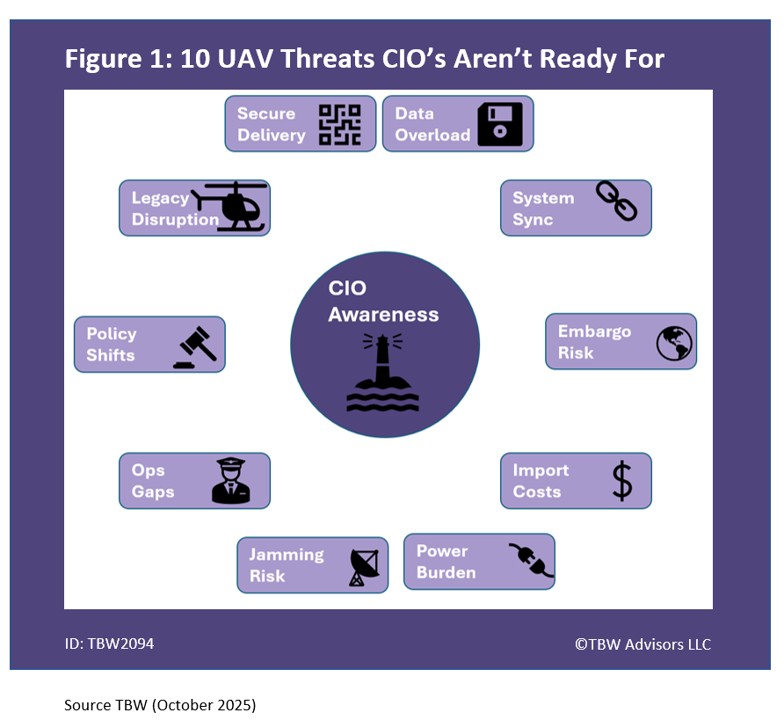
    1. Whisper Report: What’s the biggest UAV threat CIOs aren’t ready for?
    2. Whisper Report: How will drones change enterprise data strategy?
    3. Whisper Report: What’s the most underrated UAV use case in industry?

    Readers and viewers wishing to experience the entire event are encouraged to view the Conference Whispers: Commercial UAV Expo 2025 Playlist in its entirety. Once the video edition is available, the playlist will be sited as a pinned comment on the video edition. It is also easy to locate any previous Conference Whispers playlists through TBW Advisors LLC corporate website.

    Keynotes and Sessions

    At the Commercial UAV Expo we were excited we could cover the keynotes this year. The opening monologue set the stage. Buzz Solutions Kaitlyn Albertoli kicked off the event with 5 tips for overcoming inaction in your drone problem. This was followed by a great case study fireside chat with her client Dominion Energy. Dominion’s Thomas F. Butler emphasized that collaboration is the key to success. This was followed by a fascinating case study of how drones were used to capture the stunning beauty of the Grand Canyon.

    Commercial UAV Expo’s team content manager, Matt Collins welcomed all back on Thursday morning. The Keynote panel was hosted by Cyberhawk’s CEO Chris Fleming. Collaboration was the key emphasis and produced one of our favorite quotes of the event. “Safety is not Proprietary”. The session also provided many insights for succeeding with FAA paperwork be it waivers or permits. The morning keynote was concluded with the awarding of the 2025 Eric Talley Memorial Award to Officer Matt Rowland.

    DRONES

    When one attends a Commercial UAV expo, it is not unusual to see a lot of drones including a variety of specialty drones. IPET drones’ propellers and motors come as a set, easily snap on and off, and are notoriously quiet. These propellers also enable very quick maintenance. If you are seeking a variety of drones including nano drones, Ascent Aviation shared their wares. Need to cover remote areas? Starling’s drone in a box even can automatically manage between the three batteries possible in the box with the drone. Perhaps you need to deal with the chemicals of agriculture? Central UAS drones are specifically designed to handle the agricultural and pest spray space. If chain of custody regarding the cargo for applications such as medical deliveries, blueflite drones have you covered. Heavy cargo? FlyingBasket can handle 100 kilo cargo with a 200-kilo capable drone coming by year’s end. Parallel Flight Technologies are hybrid drones and can handle 100 pounds for 1.4 hours or 50 pounds for almost 3 hours. Finally if you want a tethered drone or want to convert your drone to a tethered drone, ELISTAIR came to Vegas all the way from France share their solution.

    If you were seeking a distributor for drones, there were a number of options on site. One example was Frontier that represents product lines from over 40 different manufacturers. Another example was Multicopter. They consider themselves a drone provider with their advantage being NOT offering services. This eliminates competing with the manufacturers themselves. They enjoyed speaking both with drone manufacturers on site as well as customers seeking a great source to purchase their enterprise drones.

    Finally, one of the great challenges for all drone manufacturers is testing their drones. Filing all that paperwork and enduring the FAA delays can interfere with business. Ukraine, represented by their San Fransico Consulate, Consul General Dmytro Kushneruk wanted drone manufacturers to know that you are welcome in Ukraine. Unlike the US, it is only a matter of a few weeks to get approval for testing. They also have scenarios not generally available. This has resulted in over 2,000 drone producers coming out of Ukraine.

    Communications

    A universal need for drones is the ability to communicate either back to their controller or back to the enterprise. Teal.io specializes in mission critical infrastructure. With one SIM card you can connect to 100’s a networks via a single pane of glass including the ability to switch networks. GEODNET represents the largest RTK network – real-time kinematics makes GPS significantly more accurate which is required with drones. If you are concerned about GPS getting jammed, TUALCOM operates in anti-jam, electronic warfare, data links, flight termination, terrestrial navigation, and 4G and 5G as well as telemetry devices. Of course, alternatively one could leverage Anello Photonics’ World’s smallest optical gyroscope to ensure your navigation in the event GPS is blocked, spoofed or jammed. This year they brought their new maritime solution to expo hall.

    Components

    As many drone manufacturers are gathering, those creating components and parts for drone those very manufacturers are also exhibiting. On the power side, if you are familiar with the benefits and challenges of hydrogen, H2MOF does not store it as a gas or liquid – enjoy their video to learn more! Do you want to further reduce the weight of your aircraft? Are you hoping to save a little money over carbon fibre? Mag Materials, a magnesium specialist, may be the vendor you have been looking for. If you need LiDAR sensors but could use help on the entire end to end picture? Green Valley International is looking forward to speaking with you. Finally, if your drones deal with harsh, hot environments? Pelican Wire has heat resistant custom wire to fit your needs. In fact, they had three different types of specialized wire on display. In addition to the heat resistant, they shared their Thermocouple/RTD wires which measure temperature, resistance wires that generates heat, and various other custom engineered wire solutions for specific customer applications.

    Compliance

    With the October 6, 2025, deadline to comment on Part 108 for the FAA’s Notice of Proposed Rulemaking fast approaching – it was the talk of the town. We were able to capture an exclusive summary of the panel discussing everyone’s primary concerns. This conversation highlighted many areas of concern and critical tips to ensure your comments are counted and matter. Once 108 passes, many drone manufacturers may be seeking components that can enable compatibility with the rules. To that end, uAvioni has been developing technology aligned with the proposed rules and is ready to serve. Part 108 is all about making the skies safe and enabling objects to navigate amongst each other. For pilots have concerns, DSPA – drone service providers alliance -is a group advocating exclusively on behalf of pilots on the local and national level.  

    Drone Operations

    At the enterprise level, drone operations require a lot of strategic thought, planning and technology. We first heard of the enterprise AI powered visual intelligence of Buzz Solutions during the keynote. The emphasis is always getting all of the information out of the data you can for all the use cases available for a given data set. Collect once, use many times was a common theme at the event this year. AirData provides a fleet management solution to manage all your UAS fleets, pilots, certifications, checklists and the likes. If your industry requires the handling of special care cargo, Apco Defence has a highly innovative drone recovery systems with technology to provide a soft landing. If your challenge is understand where that fleet of drones and aircraft are flying, ALOFT can enable you to visualize your airspace.

    Frequently, drones are requested in locations a great distance from population making them difficult jobs to accept. Some drone operators got together with Custome Trailers to create a remote operating hub for drone operators. The result is Drone Pro Trailer and the Drone Ops Company.

    Pilots are a required part of every organization. If you want enable them to virtually practice, Zepher has your covered over a large variety of aircraft. Looking to prepare your pilots for certifications? USI shared their enterprise solution. Expanding the team? The Neuro Diversity Works organization may have just the talent you are seeking!

    Next Year’s Conference  

    Commercial UAV Expo 2026 will once again return to Las Vegas and will be held at Caesars Forum on September 1-3, 2026.

    *When vendors’ names are shared as examples in this document, it is to provide a concrete example of what was on display at the conference, not an evaluation or recommendation. Evaluation and recommendation of these vendors are beyond the scope of this specific research document. Other examples products in the same category may have also been on display.

    TBW Advisors LLC Logo

    Corporate Headquarters

    2884 Grand Helios Way

    Henderson, NV 89052

    ©2019-2025 TBW Advisors LLC. All rights reserved. TBW, Technical Business Whispers, Fact-based research and Advisory, Conference Whispers, Industry Whispers, Email Whispers, The Answer is always in the Whispers, Whisper Reports, Whisper Studies, Whisper Ranking, The Answer is always in the Whispers, and One Change a Month, are trademarks or registered trademarks of TBW Advisors LLC. This publication may not be reproduced or distributed in any form without TBW’s prior written permission. It consists of the opinions of TBW’s research organization which should not be construed as statements of fact. While the information contained in this publication has been obtained from sources believed to be reliable, TBW disclaims all warranties as to the accuracy, completeness or adequacy of such information. TBW does not provide legal or investment advice and its research should not be construed or used as such. Your access and use of this publication are governed by the TBW Usage Policy. TBW research is produced independently by its research organization without influence or input from a third party. For further information, see Fact-based research publications on our website for more details.


  • Whisper Report: How can telemedicine be optimized to improve patient care?

    Whisper Report: How can telemedicine be optimized to improve patient care?

    Published to clients: September 2, 2025                              ID: TBW2064

    Published to Readers: September 3, 2025

    Published to Email Whispers: October 27, 2025

    Public with Video Edition:  October 27, 2025

    Analyst(s): Dr. Doreen Galli

    Photojournalist(s): Dr. Doreen Galli

    Abstract

    This report explores how telemedicine is evolving beyond convenience to deliver deeper, more personalized care. From AI-powered test result interpretation to seamless appointment coordination and continuity across care settings, experts at HIMSS25 reveal how digital tools are reshaping the patient journey. Discover how telemedicine can close access gaps, enhance understanding, and support long-term health outcomes—if systems are designed with the full patient lifecycle in mind.

    Target Audience Titles:

    • Chief Information Officer, Chief Medical Officer, Chief Data Officer, Chief Digital Officer, Chief Innovation Officer, Chief Patient Officer
    • Clinical Informatics Specialists, Telehealth program manager, Health IT Architect, Clinical Data Analyst, Biomedical Engineer, AI/ML Engineer (Health Focus), Patient Engagement Strategists, Virtual Care Coordinator

    Key Takeaways

    • AI-enhanced telemedicine can streamline appointment booking, interpret test results, and personalize care recommendations—improving speed, clarity, and access for patients.
    • Continuity of care is the next frontier—integrating telemedicine across acute, post-acute, and home health settings to support the full patient journey.
    • Access equity improves when telemedicine includes specialists and reaches underserved populations, addressing socioeconomic and geographic barriers.
    • Patient understanding is amplified when generative AI explains results and next steps in context, reducing confusion and improving engagement.
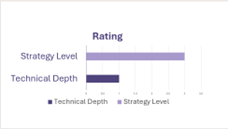
    Strategy of 4, technical depth of 2


    How can telemedicine be optimized to improve patient care??

    We took the most frequently asked and most urgent technology questions straight to the health systems technology experts gathering at the Healthcare Information and Management Systems Society (HIMSS) 2025 Global Health Conference and Exhibition or HIMSS25 for short. This Whisper Report addresses the question regarding how can telemedicine be optimized to improve patient care? Figure 1 depicts two patient care optimizations one can expects from telemedicine.

    Two benefits of Telemedicine
1. Patient Experience
2. Continuity of Care

    Patient Experience

    The first benefit many expect to experience with telemedicine is the patient experience. For example, when getting test results, AI can be leveraged for the benefit of the patient to find a doctor. As Aisera’s Daniel Caravajal suggest, “I get my test results it can recommend me doctor that’s specific on that area right and it can book the appointment right it can coordinate the calendars and basically made that experience a lot faster a lot seamless and easier to kind of interact with.” Caravajal further suggests AI can help the patient understand the results. “let’s say you get your test results. We can analyze them and give you suggestions that is the unique part about a genetic AI is not only delivering a unique use case but it’s also understanding the situation. It’s understanding the intent and making further suggestions.” Valuable to note that it is always best to confirm any such information with your actual practitioner! MinttiHealth’s Xiaoqian Zou suggests telemedicine technology can, “give everyone access to the easy health care solution and service.”

    Continuity of Care

    A critical part of the patient experience that also affects the medical care is that of continuity of care.

    As Alexander Group’s Tray Chamberlin advised, “what we think is probably the next evolution in tele medicine is that continuity of care where you’re really thinking about a patient across the entire life cycle be it acute to Post Acute to maybe even home health and integrating that tele medicine it more so that the date and Records can still communicate and we understand the holistic patient Journey.” The significant benefit of telemedicine as Chamberlin further observed, “we’re also meeting the patient where they are and so you know the inclusion of specialists in telemedicine certainly just from a socioeconomic perspective getting access to the right populations that traditionally maybe don’t have access.” For additional background on the benefits and current state of telemedicine, see the Press Conference for OnMed from CES.

    Related playlists

    1. Whisper Report: How can AI be effectively integrated into healthcare systems?
    2. Conference Whispers: HIMSS 2025
    3. OnMed Press Conference

    *When vendors’ names or quotes are shared as examples in this document, it is to provide a concrete example of what was on display at the conference or what we heard doing our research, not an evaluation or recommendation. Evaluation and recommendation of these vendors are beyond the scope of this specific research document.  

    TBW Advisors LLC Logo

    Corporate Headquarters

    2884 Grand Helios Way

    Henderson, NV 89052

    ©2019-2025 TBW Advisors LLC. All rights reserved. TBW, Technical Business Whispers, Fact-based research and Advisory, Conference Whispers, Industry Whispers, Email Whispers, The Answer is always in the Whispers, Whisper Reports, Whisper Studies, Whisper Ranking, The Answer is always in the Whispers, and One Change a Month, are trademarks or registered trademarks of TBW Advisors LLC. This publication may not be reproduced or distributed in any form without TBW’s prior written permission. It consists of the opinions of TBW’s research organization which should not be construed as statements of fact. While the information contained in this publication has been obtained from sources believed to be reliable, TBW disclaims all warranties as to the accuracy, completeness or adequacy of such information. TBW does not provide legal or investment advice and its research should not be construed or used as such. Your access and use of this publication are governed by the TBW Usage Policy. TBW research is produced independently by its research organization without influence or input from a third party. For further information, see Fact-based research publications on our website for more details.
  • Whisper Report: How can organizations implement zero-trust security without disrupting user experience?

    Whisper Report: How can organizations implement zero-trust security without disrupting user experience?

    Published to clients: July 23, 2025                               ID: TBW2084

    Published to Readers: July 24, 2025

    Published to Email Whispers: TBD

    Analyst(s): Dr. Doreen Galli

    Photojournalist(s): Dr. Doreen Galli

    ABSTRACT:

    “Organizations can implement zero-trust security without disrupting user experience by prioritizing frictionless authentication, especially biometrics, and enforcing least-privilege access through dynamic policies. Understanding user context and behavior enables informed decisions that preserve continuity. Self-service access tools reduce delays, while streamlined verification processes minimize frustration. With thoughtful planning and clear communication, zero trust can enhance both security and usability, ensuring users access only what they need—when they need it—without unnecessary barriers. This report includes insights from executives and technologists at CyberSolve, Lumos, Imprivata, Simeio, Panani, Keyless, Oasis, Apono, Omada, and Cubeless, quoted throughout the discussion.”

    Target Audience Titles:

    • Chief Information Security Officer, Chief Technology Officer, Chief Digital Officer, Chief Information Officer
    • Chief Product Officer, Chief Experience Officer
    • IAM engineers, Security Architects, DevSecOps Engineers, UX Designers, IT Ops Managers, Application Security Architects

    Key Takeaways

    • Use biometric authentication to streamline access and reduce friction for users.
    • Apply least-privilege policies with dynamic adjustments to maintain secure, appropriate access.
    • Enable self-service access changes to minimize delays and improve user experience.
    • Understand user context and behavior to make informed, non-disruptive security decisions.

    How can organizations implement zero-trust security without disrupting user experience?

    We took the most frequently asked and most urgent technology questions straight to the Technologists gathering at Identiverse 2025 held at Mandalay Bay in Las Vegas. This Whisper Report addresses the question regarding how can organizations implement zero-trust security without disrupting user experience?

    What is the desired user experience?

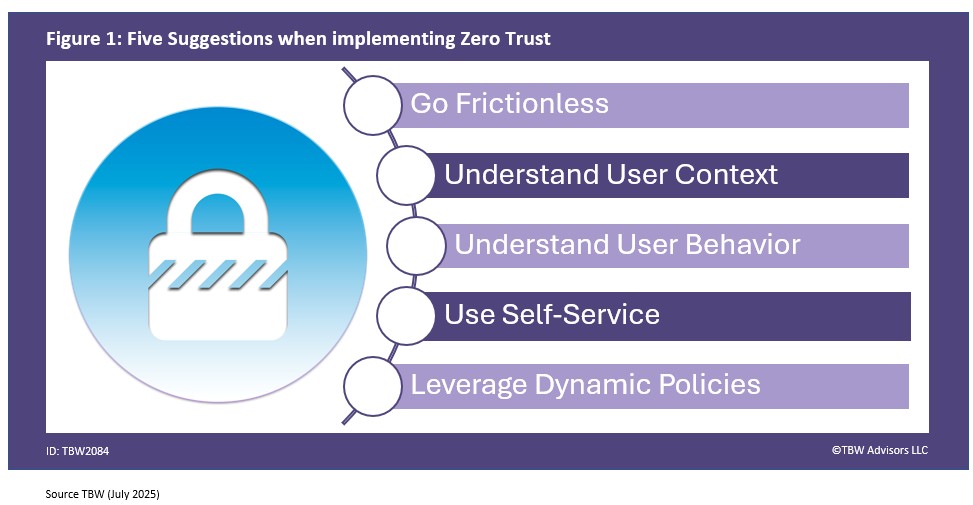
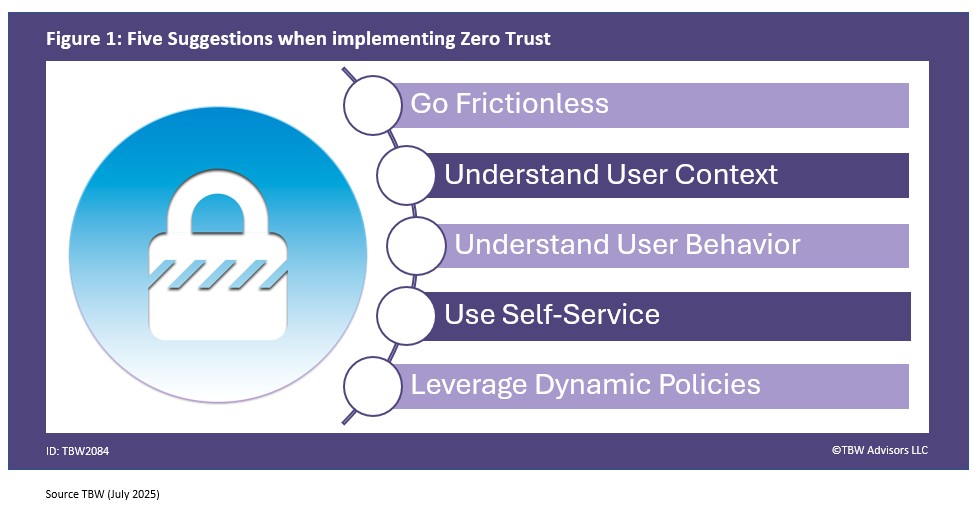
    At the end of the day, the goal is, as Imprivata’s Diron Chai put it, “authentication and visibility and control to making sure that you know the right people are accessing the data whether remotely or within the organization in terms of their role and their functionality and then be a being able to understand who’s in the system when and why that all ladders up to a zero-trust architecture that we’re able to bring forth in a full architecture.”  Reaching this goal won’t be easy but as Simeio’s Octavio Lopez emphasized, “There’s a lot of communication that needs to happen and that’s something that we help a lot of our customers with.” A lot of communication and planning with the customers’ experience kept in mind. Here are five suggestions attendees at Identiverse offered also depicted in Figure 1.

    Five suggestions when implementing zero trust.
1. go frictionless, 
2. understand context
3. understand behavior
4. use self service
5 leverage dynamic policies

    1. Go Frictionless with Bio

    One common suggestions to deploy biometric based identity and access management solution. As Panani’s Jim Harris suggested, “make the authentication of your customer as frictionless as possible a one-time identity verification process establishes that customer in the future they present a simple credential match their biometric information to the information stored in the credential that they own and control making it a very frictionless fast way to authenticate with your customer.” And this is something Alex Jones from Keyless can also agree with! “going to pitch biometrics this is the fastest way to prove who you are effectively implementing zero trust.”

    2. Understand User Context

    Guy Feinberg at Oasis suggests that understanding the user context is the winning approach. He started by simply asking “Are you familiar with the scream test?” For those of you not familiar, one not uncommon method in IT to understand how a resource, in this case an identity, is used by disconnecting or unplugging the resource and see who screams. Feinberg went on to further explain, “when you want to understand what’s this identity is used for so what you do you decommission it and just see who’s at the open space is screaming that something is broke. We do we help you construct all the context around the consumption of that identity so you can see the full picture before you’re taking actions so you’ll have informed actions deciding do we need this type of identity now uh should we change the permission should we decommissioning it completely all without disrupting the workforce and making sure that business continuity stays on and nothing is disrupted aspects of this.”

    3. Understand User behaviour

    Beyond the context of what the user is using, Imprivata’s Diron Chai recommends also understanding the how and the when. “ Being able to inject simple multifactor authentication into the environment at the local level also being able to track the behavior of credentials of people accessing  like Windows endpoints as an example or mobile devices and be able to have the analytics to show utilization of the endpoint but also who what when was accessed within that session.”

    4. Use Self-Service

    To maintain the best user experience, Apono’s Ofir Stein recommends getting the human out of the loop. “you keep the user experience by allowing self-serve in your organization to provide access changes combine these two and you actually provide zero trust to all of the resources.”

    5. Leverage Dynamic Policies

    Omada’s Craig Ramsay highlighted the potential behind dynamic policies. “By using dynamic and continuous policies to make sure that their access is appropriate and it’s always at that level of least privilege and then it’s granted, when they join the organization, and as they move around the organization, and it stays appropriate.” It’s always nice when your privileges keep up with organizational changes – without human intervention or manual configuration.

    In Conclusion

    As Cubeless’ Treb Ryan concluded, “I find zero trust has greatly enhanced our user experiences and greatly made my job easier in the old days where there’s systems where you had to figure out which networks could connect or who would have access to what particular piece it was a nightmare.”

    Finally Lumos’s Janani Nagarajan reminded all, “not just in the networking layer not just in the app layer but a critical layer for us is identities because that’s where the workforce the humans the employees the contractors the vendors your customers are actually interacting with the apps.” Identities is the key to minimizing friction for the users in zero trust. If your organization is implementing a zero trust architecture and want to ensure you are on the right track, remember to book an inquiry. 

    Related playlists & References

    1. Whisper Report: How can organizations implement zero-trust security without disrupting user experience?
    2. Conference Whispers: Identiverse 2025
    3. Conference Whispers: Identiverse
    4. Conference Whispers: Identiverse 2024

    Corporate Headquarters

    2884 Grand Helios Way

    Henderson, NV 89052

    ©2019-2026 TBW Advisors LLC. All rights reserved. TBW, Technical Business Whispers, Fact-based research and Advisory, Conference Whispers, Industry Whispers, Email Whispers, The Answer is always in the Whispers, Whisper Reports, Whisper Studies, Whisper Ranking, Whisper Club, The Answer is always in the Whispers, and One Change a Month, are trademarks or registered trademarks of TBW Advisors LLC. This publication may not be reproduced or distributed in any form without TBW’s prior written permission. It consists of the opinions of TBW’s research organization which should not be construed as statements of fact. While the information contained in this publication has been obtained from sources believed to be reliable, TBW disclaims all warranties as to the accuracy, completeness or adequacy of such information. TBW does not provide legal or investment advice and its research should not be construed or used as such. Your access and use of this publication are governed by the TBW Usage Policy. TBW research is produced independently by its research organization without influence or input from a third party. For further information, see Fact-based research publications on our website for more details.

  • Whisper Report: How can we ensure compliance with new and evolving Cyber Physical security regulations?

    Whisper Report: How can we ensure compliance with new and evolving Cyber Physical security regulations?

    Published to clients: July 10, 2025                                                                          ID: 2075

    Published to Whisper Club: December 19, 2025

    Email Whispers Release:  March 23, 2026

    Public: March 24, 2026

    Analyst(s): Dr. Doreen Galli

    Photojournalist(s): Dr. Doreen Galli

    Abstract:

    Cyber-physical security, like healthcare tech, must carefully manage PII. Experts highlight privacy-preserving biometrics, user-controlled consent, and anonymous face matching. Regulatory compliance, such as GDPR, drives standardization and innovation. As laws vary by region, adaptable and consistent global system architectures are essential for scalable, secure, and compliant operations.

    Target Audience Titles:

    • Chief Technology Officer, Chief Security Officer, Chief Information and Security Officer, Chief Trust Officer, Chief Compliance Officer, Chief Risk Officer
    • Head of Product, VP of Product, Chief Marking Officer, Data Protection Officer,
    • Enterprise Architect, Director of Data Protection, Director of Data Governance, Chief Privacy Officer

    Key Takeaways

    • Privacy-first design: Cyber-physical systems must protect PII using encrypted biometrics, local storage, and user-controlled consent mechanisms.
    • Anonymity matters: Face matching enables identity verification without revealing personal data, preserving user anonymity.
    • Compliance drives innovation: Regulations like GDPR standardize data practices and encourage secure, privacy-focused system development.
    • Global consistency is key: Scalable, compliant operations require adaptable, non-proprietary architectures across diverse regions and regulatory environments.

    How can we ensure compliance with new and evolving Cyber Physical security regulations?

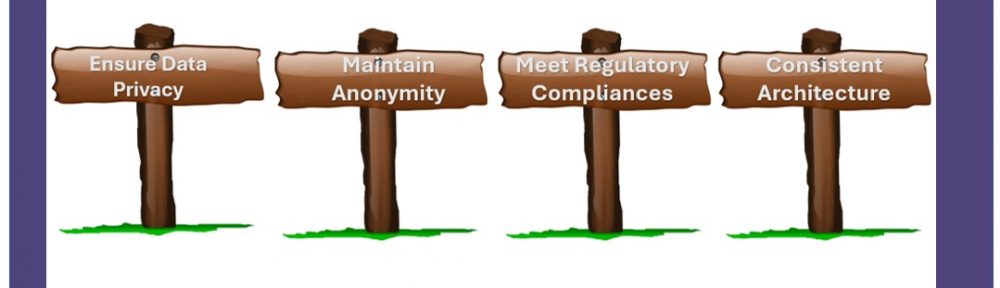
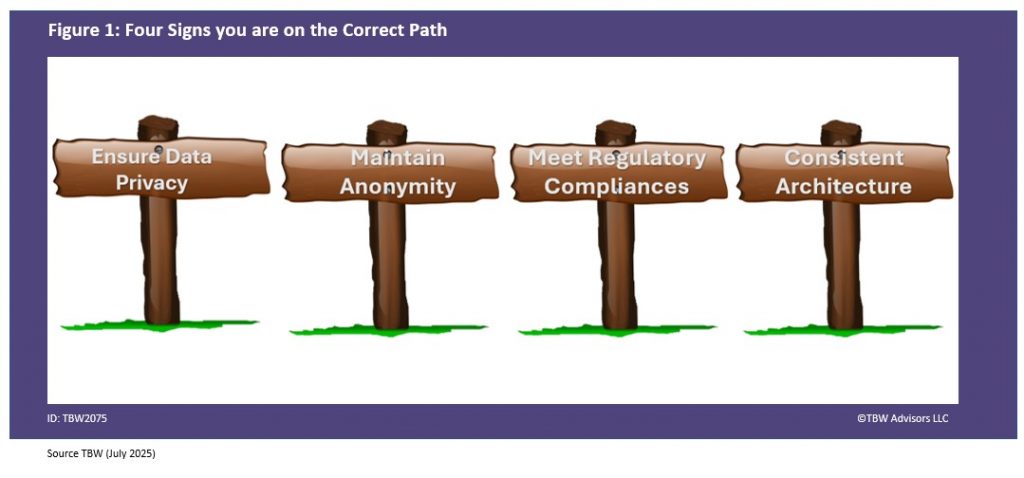
    We took the most frequently asked and most urgent technology questions straight to the cyber physical security experts gathering at ISC West 2025. This Whisper Report addresses the question regarding how can we ensure compliance with new and evolving cyber physical security regulations? We will know explore the four signs you are on the correct path as depicted in Figure 1.

    4 signs you are on the correct path
Ensure data privacy, maintain anonymity, meet regulatory compliance and deploy leveraging a globally consistent architecture

    Data Privacy

    One very interesting aspect of the cyber physical security space that reminds of healthcare tech is the handling of PII or personally identifiable information data. As Safr’s John Cassie shared, in the cyber physical space it, “has a lot to do with what we talked about as far as PII and how we manage data.” Or as LVT’s Steve Lindsey observed, “what we call private or data of sovereignty .. from a data security perspective the technology and the architectures of how these systems are built really have to be in place to address that the PII information really comes down to our use of AI.”

    Fortunately, the regulations for privacy include related standards for vendors. As Intel’s RealSense’s Mike Nielsen noted, “I have been very excited about the Privacy preservation of biometric data is really possible now so I can get a template of a human being from their face that can be stored and encrypted it can be handed back to me so in my pocket.”

    Managing user consent is a must to achieve privacy in the cyber physical space. Bioconnect’s Edsel Shreve argued, “in privacy where more and more controls going in the user’s hand to say yes I am allowing you to use my biometric. If I ever want to revoke that consent I need proof that you deleted my data and that it’s no longer being used.” He further explained, “we build in to both a upfront gather consent with an audit trail that says okay the user provided consent we didn’t just check a box and say yeah.” Furthermore, the solution must realize the full lifecycle of permission. Edsel Shreve further explained, “you can just do regular maintenance and go in and say who hasn’t authenticated in 6 months what are we going to do with that data right do we want to delete the template or just alert the person or alert an administrator.”

    Anonymity

    Anonymity has to do with the lack of the ability to identify the person. As LVT’s Steve Lindsey commented, “there’s a difference between facial recognition and face matching right.” Facial recognition includes identification while facial matching allows the face to remain anonymous. A great example was revealed by Intel’s RealSense’s Mike Nielsen.

    “I’ve actually got a version of my this QR code is my face template. From this is 512 bytes it’s a it’s just a simple Vector map that looks at 80 points on my face but it’s mine. This isn’t siting in a database somewhere. This isn’t living on somebody’s server. This is physically in my pocket as a badge. I can then apply that (badge) by walking up to one of our devices – one of our cameras have the scan. It pulls in that QR code, evaluates what that template looks like. Then I look at the camera it pulls the template from my actual face and compares the two. The cool thing about the techniques that is it’s privacy preserving by definition it never leaves the device it can be dissolved immediately and you never have to send a picture or any personally identifiable info anywhere outside of me scanning my badge. Then the device makes sure I can unlock that door.”

    Thus, this example achieves privacy and anonymity.

    Regulatory Compliance

    When it comes to cybersecurity and data governance – there are the things you want to do as an organization based on your public commitments such as your privacy statements. Then, there are requirements which are legal requirements sometimes coming from a location and sometimes defined based on your industry referred to as regulatory compliance. As LVT’s Steve Lindsey put it, “we think about the problem in the context of the of the compliance and Regulatory things that we have to have as we’re designing and building this stuff from the beginning.” Furthermore, since we are dealing with cyber physical security,

    The best part about regulatory compliance according to Intel RealSense’s Mike Nielsen is, “they’re really well defined at least in the case of like GDPR so GDPR has very strange requirements on how to use PII but specifically how to use sensitive PII like biometric information one of the things that we’ve seen help move the industry forward ironically is having the regulation in place allows people to have a Level Playing Field.” That means that vendors will not be penalized for taking the more difficult road by protecting the customer as all must take equal precautions. Gary Chen of EverFocus noted, “to ensure that we have keep our regulations up to date, we need to keep advancing our technology and mostly from our end installers that will be the key .. also keep good connection with your customer.”

    Requirements evolve by location as every product vendor will realize. “One of the things that’s occurring is that whether it’s in Europe or in each state coming up with new requirements for both security of data and compliance.” Edsel Shreve, Bioconnect. When faced with this challenge, it is always best to step back and see how to adjust the architecture to accommodate this capability as a configurable option vs to create a product branch. Today’s regulations in location A become tomorrow’s regulation in location Z. One can then configure at the system level as regulations evolve in different locations.

    Finally, it is important to keep in mind the architecture must accommodate the cyber physical security space. who has “from an access control standpoint is not only managing who has access in and out of the mine but also incorporating some functionality around safety who’s completed what safety classes and if they haven’t completed the proper classes then we have the ability to manage access control based on what needs to happen.” Cyber physical security includes the physical safety of the employees themselves and all that goes into ensuring safety compliance regulations are met – in each location.

    Consistent Architecture

    The complexity of cyber physical security is magnified in organizations the wider the physical disparity across country and continental boundaries. As one might expect, different vendors have different footprints across the globe. For smooth global operations one generally recommends standardized solutions as opposed to propriety solutions. As Safr’s John Cassie explained, “would be nice if I could just capture that from the existing access control system and not have to do some extra procedure so that’s another element that allows us to have sort of this compliance across my entire security platform. As long as I am not using solutions that are pigeonholing me into proprietary solutions.” There may be slightly better solutions in this aspect or that aspect locally available but those frequently ruin the ability to have global clarity. It is critical to maintain a consistent architecture globally unless you want custom roadmap items for each and every change. If you are anywhere in the lifecycle of trying to realize such as solution, be sure to set up an inquiry plan so that an expert who has been there can provide actionable guidance.

    Related playlists

    1. Industry Whispers: Public is Private – Confidential Computing in the Cloud | TBW ADVISORS
    2. Conference Whispers: Black Hat USA 2019
    3. Whisper Report: How can we enhance our cybersecurity measures to protect against emerging Cyber Physical threats? 
    4. How can we ensure compliance with new and emerging cyber physical security regulations?
    5. Conference Whispers: ISC West 2025

    Corporate Headquarters

    2884 Grand Helios Way

    Henderson, NV 89052

    ©2019-2026 TBW Advisors LLC. All rights reserved. TBW, Technical Business Whispers, Fact-based research and Advisory, Conference Whispers, Industry Whispers, Email Whispers, The Answer is always in the Whispers, Whisper Reports, Whisper Studies, Whisper Ranking, Whisper Club, Whispers, The Answer is always in the Whispers, Vegas Convention Library, and One Change a Month, are trademarks or registered trademarks of TBW Advisors LLC. This publication may not be reproduced or distributed in any form without TBW’s prior written permission. It consists of the opinions of TBW’s research organization which should not be construed as statements of fact. While the information contained in this publication has been obtained from sources believed to be reliable, TBW disclaims all warranties as to the accuracy, completeness or adequacy of such information. TBW does not provide legal or investment advice and its research should not be construed or used as such. Your access and use of this publication are governed by the TBW Usage Policy. TBW research is produced independently by its research organization without influence or input from a third party. For further information, see Fact-based research publications on our website for more details.

  • Whisper Report: How can we integrate AI-driven customer service solutions with our existing IT infrastructure?

    Whisper Report: How can we integrate AI-driven customer service solutions with our existing IT infrastructure?

    Published to clients: July 3, 2025                                            ID: 2079

    Published to Readers: July 4, 2025

    Email Whispers Released: August 11, 2025 8am

    Public and Video Edition Released: August 11, 2025 11am

    Analyst(s): Dr. Doreen Galli

    Photojournalist(s): Dr. Doreen Galli

    Abstract:

    “Integrating AI customer service with existing IT systems starts by setting clear business goals. AI should enhance, not disrupt, current workflows and streamline real-time support. Every organization has unique systems, so tailored integration is essential. A major challenge is fragmented data—making robust pipelines and clean, synchronized data critical. Accurate timestamps and system compatibility across platforms are key to ensuring effective AI performance and a smooth digital transformation journey.”

    Target Audience Titles:

    • Chief Information Officer, Chief Technology Officer, VP/Director of IT Operations, Enterprise Architects
    • Chief Customer Officer, VP/Director of Customer Services/Success, Contact Center Operation Managers
    • Solution Architects, DevOps & IT Administrators, Customer Support Agents, Data Scientists and ML Engineers

    Key Takeaways

    • Start with clear business goals so AI enhances workflows without causing disruptions.
    • Tailor integration to your unique tech environment to avoid inefficiencies.
    • Reliable, clean, and synchronized data pipelines are essential for effective AI-driven customer service.

    How can we integrate AI-driven customer service solutions with our existing IT infrastructure?

    We took the most frequently asked and most urgent technology questions straight to the technologists gathering at Customer Connect Expo 2025 held at the Las Vegas Convention Center. This Whisper Report addresses the question regarding how can we integrate AI-driven customer service solutions with our existing IT infrastructure? As Ford’s Dr. Kalifa Oliver shared, “first we need to break down our needs and our goals and figure out which pieces of AI actually build efficiencies in our IT systems because right now there are too many systems that are fragmented.” With ALL AI projects, it is best to start with the business goal not the technology. We do not want to spend resources to integrate technology that goes unused. Furthermore, the context of the business goal helps guide engineers when they have design choices to make.

    Customer Service Workflows

    AI in Customer Service is all about optimizing and improving the customer service workflow to lead to maximum customer satisfaction. As Zaon’s Jason Kaufman shared, “using artificial intelligence tools within the organization to actually help drive and make more efficient the processes that go into place in order to support good customer service. For example, leveraging artificial intelligence to actually analyze chats real time community forums real time. Actually monitoring that (the communities) helping to gain insights about what your customers have questions about so that you can leverage the AI to actually generate the knowledge on the fly to actually provide that (information removing confusion) back to them real time as if it’s another person on that community thread.” The nonobvious challenge in achieving this solution is best described by Claritiv’s CEO Sean Gigremoss. “Everybody has workflows. Every company is unique. What tools do they use? What products do they use now?  Do we need to build it?” In other words, every organization has a unique, highly mixed environment with varying degrees of maturity both in the technology itself and the organization’s ability to deploy technology.

    Verse.ai’s Zac Brooksher recommends focusing on complimenting the current workflows and processing. “We can integrate AI driven customer service solutions using full funnel metrics understanding all of the conversations the timestamps the channels the appropriate team members what next steps are all integrating into existing systems and processes just to complement what the current workflows and data processing is today like.” Any technology not realizing it is complimenting an existing process will instead create process interrupts. The distinction really is a big difference.

    The Challenge: Data is everywhere!

    As Claritiv’s Sean Gigremoss shared, data is everywhere! “They make it so easy for us to integrate because in the end that’s important because all the data are in this different .. disparate systems. You need information from Salesforce you need information from zoom you need information from slack you need information from your database you need information from your customer’s database so to be able to do that you need to make sure that you’re using the tools or you’re partnering with companies that help you so that you can focus on what you do best.”

    But the data isn’t just everywhere, it comes from everywhere. The first obvious location was shared by Enthu.ai’s Atul Grover, “we integrate with the telephony at the dialer.” And the rest such as the web and email communications, “we ingest that using an API driven environment.” Diabolocom specializes in capturing all that occurs between the customer and the organization on mobile devices. As Diabolocom’s Benjamin Shakespeare shared, “with our mobile solution that we are about to release

    the market  .. So all field reps anybody who is using a cell phone today with every interaction they have on their phone our AI will then score that call transcribe it and push it directly into the CRM So any lack of compliance that you are seeing today in your organization from people that are not sitting behind a computer that will be no longer.”

    Where the magic happens!

    Now that we understand we are complimenting the existing customer experience workflows for the benefit of the customer experience and that data is everywhere, what can we do?  As Macy’s Siva Kannan Ganensan shared, “you need to make sure your data pipeline is very robust when we talk about all this AI integration data is the core so make sure the data is cleansed and always readily available ready to serve with that we’ll be able to integrate an into your existing architecture or in your organization.”

    workflow pictured above a data fabric with robust data pipelines

    Figure 1. Compliment Workflows & Leverage Robus Data Fabric

    It’s all about the data infrastructure! You need robust data pipelines as part of your data fabric to seamlessly integrate any new AI offering as depicted in Figure 1. AND you must ensure data quality. For example, data quality is paramount when dealing with timestamps of customer communications. What time zone is your organizational standard? Do your IT systems work in that time zone, and do you know what systems provide timestamps in other formats or time zones? Is that true for any and all corporate acquisitions feeding data into the system? Is the system designed to handle the variety of daylight savings time scenarios? Are all the clocks adjusted for daylight savings automatically or manually? Finally, are the timestamp clocks aligned? To the second or to the minute?  It’s valuable to know if you can look at time as fact or approximation in your organization. If your organization is going through any type of digital transformation, it is critical to get the best advice available to ensure your success. Ensure your success by scheduling your inquiry with a TBW Advisors advisor before starting any critical phase of your digital transformation journey. Get the smartest advice available and leverage our firsthand experience to your advantage.

    Related playlists

    1. Whisper Report: How can we integrate AI-driven customer service solutions with our existing IT infrastructure
    2. Conference Whispers: Customer Connect Expo 2025

    Corporate Headquarters

    2884 Grand Helios Way

    Henderson, NV 89052

    ©2019-2025 TBW Advisors LLC. All rights reserved. TBW, Technical Business Whispers, Fact-based research and Advisory, Conference Whispers, Industry Whispers, Email Whispers, The Answer is always in the Whispers, Whisper Reports, Whisper Studies, Whisper Ranking, The Answer is always in the Whispers, and One Change a Month, are trademarks or registered trademarks of TBW Advisors LLC. This publication may not be reproduced or distributed in any form without TBW’s prior written permission. It consists of the opinions of TBW’s research organization which should not be construed as statements of fact. While the information contained in this publication has been obtained from sources believed to be reliable, TBW disclaims all warranties as to the accuracy, completeness or adequacy of such information. TBW does not provide legal or investment advice and its research should not be construed or used as such. Your access and use of this publication are governed by the TBW Usage Policy. TBW research is produced independently by its research organization without influence or input from a third party. For further information, see Fact-based research publications on our website for more details.

  • Whisper Report: What are the best practices for enhancing cybersecurity in FinTech?

    Whisper Report: What are the best practices for enhancing cybersecurity in FinTech?

    Published to clients: June 26, 2025                            ID: TBW2067

    Published to Readers: June 27, 2025

    Email Whispers: December 9, 2025

    Public with Video Edition: December 10, 2025

    Analyst(s): Dr. Doreen Galli

    Photojournalist(s): Dr. Doreen Galli

    Abstract:

    To strengthen cybersecurity in FinTech, experts emphasize a layered approach that combines technology and human awareness. Rising threats like phishing, smishing, and fraud demand not just better tools but also vigilant, well-trained employees. Embedding security scans into software development, analyzing diverse data signals, and adopting a “defense in depth” strategy are all critical. Ultimately, staying curious, asking the right questions, and embracing evolving technologies—especially AI—can help organizations stay ahead of cyber risks.  

    Target Audience Titles:

    • Chief Technology Officer, Chief Security Officer, Chief Information and Security Officer, Chief Trust Officer, Chief Compliance Officer, Chief Risk Officer
    • Head of Product, VP of Product, Chief Marking Officer, Data Protection Officer, Director of Data Protection
    • Security Architect, Security Engineers, Penetration Testers, Incident Response & Threat Intelligence Teams

    Key Takeaways

    • Adopt a Layered Defense: Use a “defense in depth” strategy—combine multiple security measures and analyze broad data signals to stay resilient against evolving threats.
    • Train Your Team: Human error is a top vulnerability. Regular employee training helps prevent phishing, smishing, and social engineering attacks.
    • Build Security into Development: Embed security checks directly into software pipelines to catch issues early and reduce risk at every stage of development.

    What are the best practices for enhancing cybersecurity in FinTech?

    We took the most frequently asked and most urgent technology questions straight to the finance technology experts gathering at Fintech Meetup 2025. This Whisper Report addresses the question regarding what the best practices are for enhancing cybersecurity in FinTech. As SecurityMetrics’s Matt Cowart shared, there is a, “big rise that we’ve seen is fishing and smishing.” Your employees are getting targeted via email and SMS messages. But that is not the only threat. The user or customer angle also brings in cybersecurity issues. Incentiva’s Heather Alvarez shares, “fraud is something that is very big right now and (is something) that we’re trying to combat.”

    Take a layered approach to cybersecurity. image of layered soil.
words in soil layers include:
fraud detection, MFA, trend analysis, data signal analysis, threat detection, fraud prevention, employee training, antivirus, anti-phishing, encryption, leverage AI, security patches, blockchain technology

    A Layered Approach

    Cybersecurity frequently feels like a game of whack-a-mole. Vulnerabilities seem to pop up in every dimension you explore but there is still hope. As Socure’s Matt Thompson shared, “creating layers and looking at lots and lots of data signal is important for protecting your Enterprise.” This is also known as defense in depth.

    What might these layers include? Gitlab’s Field CTO, Joshua Carroll recommends, “making sure your code is secure and doesn’t have vulnerabilities by building the security scanners into your pipelines and do those as you build the software you can save yourself an awful lot of time.” Likewise, SecurityMetric’s Matt Cowart points out that it all, “comes down to training. The weakest link is where hackers get in. Being able to strengthen your entire area – all of your employees making sure they know what to do what not to do is going to be on of the biggest things that keeps your network safe.” Effective training can minimize phishing and smishing as well as positively impact fraud detection during customer interactions.

    Thus to enhance your cybersecurity, ensure a depth in defense security strategy and that the strategy includes both technical aspects of your enterprise as well as your humans in the loop. But most important stay curious and keep building. As Incentiva’s Heather Alvarez shared, “ask the right questions ..  continuing to push and look for new features look for to AI to help us because there are a lot of Technologies out there.”

    If you are evaluating your cybersecurity environment, be sure to book an inquiry for timely advice.

    Related playlists

    1. Conference Whispers: Fintech Meetup 2025
    2. Conference Whispers: Money 20/20 2024
    3. Conference Whispers: Identiverse 2024
    4. Conference Whispers: ISC West 2025
    5. Q1: Fintech Meetup Playlist – How can we ensure Compliance with evolving regulations?
    6. Q2: Fintech Meetup Playlist – What are the best practices for enhancing cybersecurity?

    *When vendors’ names or quotes are shared as examples in this document, it is to provide a concrete example of what was on display at the conference or what we heard doing our research, not an evaluation or recommendation. Evaluation and recommendation of these vendors are beyond the scope of this specific research document.  

    TBW Advisors LLC logo

    Corporate Headquarters

    2884 Grand Helios Way

    Henderson, NV 89052

    ©2019-2025 TBW Advisors LLC. All rights reserved. TBW, Technical Business Whispers, Fact-based research and Advisory, Conference Whispers, Industry Whispers, Email Whispers, The Answer is always in the Whispers, Whisper Reports, Whisper Studies, Whisper Ranking, The Answer is always in the Whispers, and One Change a Month, are trademarks or registered trademarks of TBW Advisors LLC. This publication may not be reproduced or distributed in any form without TBW’s prior written permission. It consists of the opinions of TBW’s research organization which should not be construed as statements of fact. While the information contained in this publication has been obtained from sources believed to be reliable, TBW disclaims all warranties as to the accuracy, completeness or adequacy of such information. TBW does not provide legal or investment advice and its research should not be construed or used as such. Your access and use of this publication are governed by the TBW Usage Policy. TBW research is produced independently by its research organization without influence or input from a third party. For further information, see Fact-based research publications on our website for more details.

  • Whisper Report: What are the best practices for enhancing cybersecurity in healthcare?

    Whisper Report: What are the best practices for enhancing cybersecurity in healthcare?

    Whisper Report: What are the best practices for enhancing cybersecurity in healthcare?

    Published to clients: June 18, 2025                                                ID: TBW2063

    Published to Readers: June 19, 2025

    Email Whispers: July 22, 2025

    Public & Video Edition: July 23, 2025

    Analyst(s): Dr. Doreen Galli

    Photojournalist(s): Dr. Doreen Galli

    Abstract:

    Cybersecurity in healthcare is responsible for protecting the data that represents the life’s story of patients and infrastructure to enable proper care. Managing and securing the plethora of edge devices and the interoperability of all the technologies is an increasing challenge. There are four steps to take to enhance your healthcare cybersecurity: select a framework, leverage depth in defense, automate where possible, and test your environment.

    Target Audience Titles:

    • Chief Information Security Officer, Chief Information Officer, Chief Security Officer, Chief Technology Officer, Chief Compliance Officer, Chief Data Officer, Chief Privacy Officer
    • VP of Cybersecurity, Director of Information Security
    • Security Architect, Information Security Architect, Network Security Engineer, Systems Security Engineer, SOC Analysts, IAM Specialists, Director of Privacy

    Key Takeaways

    • Device maintenance and interoperability continue to challenge healthcare environments cybersecurity.
    • Four steps to enhance cybersecurity in healthcare environments. Select a framework, leverage depth in defense, automate where possible, and test your solution.

    Tags

    cybersecurity, privacy, healthcare, healthcare technology, health tech, HIMSS, HIPPA, medical devices, edge devices, IoT, depth in defense, automate, integration, cybersecurity frameworks, Evidently, Hal Wolf, Kai Romero, Brennen Reynolds, Absolute Security, Alexander Group, Trey Chamberlin, Aisera, Daniel Carvajal Marin

    What are the best practices for enhancing cybersecurity in healthcare?

    We took the most frequently asked and most urgent technology questions straight to the health systems technology experts gathering at the Healthcare Information and Management Systems Society (HIMSS) 2025 Global Health Conference and Exhibition or HIMSS 25 for short. This Whisper Report addresses the question regarding the best practices for enhancing cybersecurity in healthcare. Given that data breaches in 2024 affected 1 in 2 American’s health records, cybersecurity is top of mind in healthcare1. But healthcare data is not your shopping data, it represents much more. As Evidently’s Kai Romero shared, “the narrative Arc of who they are how they’ve suffered, how they’ve overcome the illnesses that they’ve experienced, you can’t treat that lightly … this is their life.” But there is a reason for concern in healthcare. For those unfamiliar, Russia has been found the source of ransomware attacks on the healthcare industry2. As HIMSS Hal Wolf shared, “security is a major issue our own the federal government the United States just announced that they were bringing down cyber security blockage or fundamentals against another foreign country recently that was yesterday.” There is no indication that the cyberattacks on healthcare will stop, just an announcement that the government is no longer stopping such attacks.

    Where are the vulnerabilities?

    Understanding that healthcare data represents the whole person and their life, where are the vulnerabilities coming from in the healthcare environment? Examining the source of the security vulnerabilities can offer insights to the efforts to defend and protect this valuable healthcare data. Turns out there are two large sources of vulnerabilities.

    Device Maintenance

    First, devices in the healthcare environment itself are an issue. As we discussed in Whisper Report: How can AI be effectively integrated into healthcare systems?, many devices on site are old. They may not have over the air (OTA) updates, may require human in the loop to update. As Absolute Security’s Brennen Reynolds stated, “any given organization that man that has our technology about 15% of the devices that are being manually managed have some missing critical security control which increases their risk to either an operational outage or a cyber event like Ransomware.” It may sound like simple advice you have heard a million times, but keeping your equipment up to date with the latest software and security patches is simply critical.

    Interoperability

    Healthcare creates complicated environments full of an array of diverse vendors. Somehow these vendors and their technology – or more specifically – the diverse array of data about the patient derived must interoperate. Not just interoperate, the data must come together to provide a picture of the patient for the practitioner. Unfortunately, as Alexander Group’s Tray Chamberlin pointed out, “a lot of interoperability issues and leaks.” Getting the technology to work together is so difficult in and of itself, the process created that ‘works’ may not be a secure solution. It is critical that during any interoperability project that protection of the data in the processes is the first a priority. Furthermore, the integration architecture and solution must      be examined at a detailed level to understand and identify any potential leakages created in the process.

    Solutions

    Organizations concern about security in healthcare technology is not going to go away. Per HIMSS’s Hal Wolf, “this is going to be the coinage of which we really improve Healthcare is information (and) information comes from data the data will be unprotected so .. it is why it (cybersecurity) is one of our (HIMSS) four focus points.. at HIMSS (25) digital Health transformation, AI, cyber security, and Workforce Development.” Information is how we improve care, thus information is the goldmine of healthcare. Figure 4 depicts Four Steps to Enhance your Healthcare Cybersecurity.

    4 steps to enhance healthcare cybersecurity 1. Select Framework
2. Leverage Depth of Defense
3. Deploy Automation
4. Test!

    Select Framework

    Through the various conversations while conducting this research, it became very clear that each organization has their own framework to guide their cybersecurity program. When selecting amongst the frameworks, ensure these common characteristics are present.

    • It should be 100% restricting while enabling productivity.
    • Needs guardrails and controls
    • It should be deliberate and intentional with how it handles your assets.

    Leverage Defense in Depth

    Regardless of where the technology is used within healthcare, certain security practices should be consistent. As Evidently’s Kai Romera shared, “some of the same things that we use in the clinical setting to protect patient data whether that’s logging out of a screen pretty quickly after it’s not active or you know taking away the protected patient information so that anyone who’s looking at the screen would not know who that patient was you want to know that they’re employing those things because this (is) patient data.” Understanding no single method covers all scenarios, it is good to use every method available when possible. For example, clinical data masking technology and standards can easily be applied to the terminals used at the front desk and billing as well.

    But data masking is not just useful at the terminal level. As Aisera’s pointed out, regarding you agentic AI solutions, we can do everything from masking PII for mask any personal data “architecture that’s going to keep your data private data privacy is probably the most important thing especially when it comes to healthcare right .. but also how it is stored right even in our cloud approach” our customers get the unique architecture so when you’re training the LLM you’re not trained in our models.”

    Deploy Automation

    Many shy away from automation, but as we pointed out in Conference Whispers: Black Hat USA 2019, a ransom ware attack can take down an organization in 30 minutes. What human on call can get notified, get online and stop an attack that fast? Furthermore, as Absolute Security’s Brennan Reynolds shared, “topic of automation there’s just too many things to be done in a day to allow and require humans to be doing all of the maintenance and management task so if the it devices across their organizations whether you have a th000 devices 10,000 or a million devices you’re never going to have enough staff to manually execute tasks to keep those devices safe and secure.” Thus it is physically impossible to stop many attacks or even simply update all the devices on site without automation.

    Test!

    Regardless of the care taken, it important to review the architecture and test the system. As Alexander Group’s Tray Chamberlin explained, “make sure that it’s not just we want this system we want to stand it up and we want the functionality but also going through the paces and testing and making sure that is playing nice but also doesn’t open up a new vulnerability within your system going forward.” A system that simply works is not the goal. Rather, a system must work and be secure, resilient, and hardened against attacks including its integration points is the minimum standard.

    We will close with remarks by HIMSS’s Hal Wolf, “ I think cyber security is going to continue to be at the Forefront of our thoughts whenever you’re dealing with data and information they are going to be bad actors… HIMSS is focused on cyber security we have cyber security forums (and) there are cyber security events taking place.”

    *When vendors’ names or quotes are shared as examples in this document, it is to provide a concrete example of what was on display at the conference or what we heard doing our research, not an evaluation or recommendation. Evaluation and recommendation of these vendors are beyond the scope of this specific research document.

    Related playlists

    1. Whisper Report: HIMSS: Question 1: How can AI be effectively integrated into healthcare systems??
    2. Conference Whispers: HIMSS 25

    Corporate Headquarters

    2884 Grand Helios Way

    Henderson, NV 89052

    ©2019-2025 TBW Advisors LLC. All rights reserved. TBW, Technical Business Whispers, Fact-based research and Advisory, Conference Whispers, Industry Whispers, Email Whispers, The Answer is always in the Whispers, Whisper Reports, Whisper Studies, Whisper Ranking, The Answer is always in the Whispers, and One Change a Month, are trademarks or registered trademarks of TBW Advisors LLC. This publication may not be reproduced or distributed in any form without TBW’s prior written permission. It consists of the opinions of TBW’s research organization which should not be construed as statements of fact. While the information contained in this publication has been obtained from sources believed to be reliable, TBW disclaims all warranties as to the accuracy, completeness or adequacy of such information. TBW does not provide legal or investment advice and its research should not be construed or used as such. Your access and use of this publication are governed by the TBW Usage Policy. TBW research is produced independently by its research organization without influence or input from a third party. For further information, see Fact-based research publications on our website for more details.
  • Whisper Report: How can we enhance our cybersecurity measures to protect against emerging Cyber Physical threats? 

    Whisper Report: How can we enhance our cybersecurity measures to protect against emerging Cyber Physical threats? 

    Published to clients: May 20, 2025                                               ID: 2073

    Published to Readers: May 21, 2025

    Email Whispers: June 13, 2025  

    Video Edition: June 13, 2025

    Analyst(s): Dr. Doreen Galli

    Photojournalist(s): Dr. Doreen Galli

    Abstract:

    As cyber and physical security continue to merge, proactive, multi-layered strategies are essential to safeguard critical assets in interconnected environments. Secure data practices, including encryption for data in transit and at rest, during compute, and ensure compliance with high security standards. Architectural resilience is crucial, integrating cybersecurity from the outset rather than retrofitting outdated systems. Correlating physical and cyber events provides valuable context. Finaly, digitizing workflows streamlines response efficiency, minimizing the window of vulnerability during attacks.

    Target Audience Titles:

    • Chief Technology Officer, Chief Security Officer
    • Chief Information and Security Officer, VP of Cybersecurity
    • Director Cyber Physical Security, Security Analyst
    • Cybersecurity Engineer, Incident Response Analyst

    Key Takeaways

    • Data must be encrypted at rest, in transit, and during execution.
    • Cyber Physical security requires a securely designed architecture from the start.
    • Cyber and physical threats must be correlated.
    • Only a digitized workflow can respond with the required speed to cyber physical threats.

    Secure data

    As with all security, cyber physical security must also be concerned with, “ data security and encryption … that’s data in the device, data in transit, data in rest at the servers, and so all of those things we have the highest level standards and we also meet more advanced requirements, “ Bioconnect’s Edsel Shreve. The solution should be flexible enough to enable any data protection requirements that come into play. Edsel Shreve went on to further explain, “for example you need to do certificate rotation for things like TLS encryption So we can do those things not every customer wants them but those are the things that we’ve actually got in our system for the folks that have those higher level requirements so it really is the combination of how do we make sure that they’re cyber secure sitting on the network and then how do we make sure that they’re  physically and the data is secure on the on the readers and devices themselves.” In addition, TBW Advisors LLC recommends confidential computing architectures for protection and privacy during computations. For additional information see Industry Whispers: Public is Private – Confidential Computing in the Cloud.

    Secure Architecture

    Taking a 1968 mustang and updating it to 2025 safety standards would be quite the challenge and likely land up with an ugly beast that is neither safe nor resembling of a mustang. Cyber physical security is no different than safety. It must be thought of and integrated from the very beginning. As LVT’s Steve Lindsey explained, “it starts with architecture if we can rethink our architectures and we can start building for cyber security in mind.” The challenge of physical cyber security is that, “for the longest time in the physical security space we’ve been using on premise systems and as we’ve lifted and shifted those into the cloud ..  what complicates that is as we’re deploying these systems it’ not just cloud to end User, it’s Cloud to IoT (Internet of Things) device which is going through usually public cellular or satellite infrastructure itself and there’s other things that need to be done to address that” Steve Lindsey.


    Correlate Physical Cyber Events

    The real power of cyber physical security is the two areas working together to correlate events. Through correlation, context and a greater understanding is realized. An example shared by Advancis’ Paul Shanks demonstrates this best. “Someone loses their badge and falls out of their pocket and they’re logged into the network from home and their badge is used at the building. Those two  events by themselves are benign but we take that together and create a an alert for the operator to look into whether is it a Cyber attack or is it a physical attack.”

    Digitize Workflow

    As early as 2019 TBW Advisors LLC has been advising clients to automate security responses when possible for the simple fact you must. Ransomware attacks were already taking place within a 35-minute window. In 2025 the cyber physical attack vector also calls for automation or a digitized workflow at the very least. As Advancis’ Paul Shanks communicated, “we can take that and make that workflow digitized so that all they have to do is read click and go. Simple as that.”

    Related playlists

    1. Industry Whispers: Public is Private – Confidential Computing in the Cloud | TBW ADVISO RS
    2. Conference Whispers: Black Hat USA 2019
    3. Whisper Report: How can we enhance our cybersecurity measures to protect against emerging Cyber Physical threats? 
    4. Conference Whispers: ISC West 2025
    TBW Advisors LLC logo

    Corporate Headquarters

    2884 Grand Helios Way

    Henderson, NV 89052

    ©2019-2025 TBW Advisors LLC. All rights reserved. TBW, Technical Business Whispers, Fact-based research and Advisory, Conference Whispers, Industry Whispers, Email Whispers, The Answer is always in the Whispers, Whisper Reports, Whisper Studies, Whisper Ranking, The Answer is always in the Whispers, and One Change a Month, are trademarks or registered trademarks of TBW Advisors LLC. This publication may not be reproduced or distributed in any form without TBW’s prior written permission. It consists of the opinions of TBW’s research organization which should not be construed as statements of fact. While the information contained in this publication has been obtained from sources believed to be reliable, TBW disclaims all warranties as to the accuracy, completeness or adequacy of such information. TBW does not provide legal or investment advice and its research should not be construed or used as such. Your access and use of this publication are governed by the TBW Usage Policy. TBW research is produced independently by its research organization without influence or input from a third party. For further information, see Fact-based research publications on our website for more details.
  • Industry Whispers: AMA with Victoria Essner

    Industry Whispers: AMA with Victoria Essner

    Join us for an inspiring Global Accessibility Day Interview, 

    Celebrate Global Accessibility Awareness Day with an empowering Ask Me Anything (AMA) session featuring international best-selling author and accessibility advocate Victoria Essner.

    With over 30 years of professional experience in assistive technology—and more than 50 years of lived experience navigating the world with vision loss—Victoria’s journey has been one of innovation, advocacy, and empowerment.

    From navigating the early challenges of digital accessibility to becoming a trusted expert, she has helped countless individuals find independence through technology.

    In this heartfelt, one-hour session, she’ll share personal experiences, lessons learned, and how her passion for accessibility has shaped her work. Discover the milestones that led her to write From Tech Frustration to Freedom and why she remains committed to making tech inclusive for all!

    Come be inspired—and bring your questions! Whether you’re new to accessibility or a long-time advocate, you’ll walk away with practical insights, renewed hope, and a reminder that inclusive tech is possible for all!

    Research Code TBW2082

    Cannot make it live? Register and submit your question. The answer will be in the video on TBW Advisors’ YouTube Channel.

    NO AI note takers allowed. Event copyrighted by TBW Advisors LLC All Rights Reserved.

    Victoria Essner is a legally blind assistive technology coach, caregiver advocate, speaker, and international best-selling author. With over 50 years of lived experience and 30+ years of professional expertise, she empowers blind and visually impaired individuals — and the caregivers who support them — through personalized training and compassionate support. Victoria has consulted with Fortune 500 companies, nonprofits, and government agencies on accessibility and inclusion. She hosts the Blessed Thru Blindness podcast and founded AT Made Easier, a membership designed to simplify tech and restore confidence. Her signature message: Breaking Barriers. Building Independence. One Breakthrough at a Time.

    Heather Osborn was most recently Engineering Manager at Zapier, leading the Developer Enablement team focused on incident management, observability, and service catalog. With over 25 years in tech, she’s worked across systems engineering and operations, including a long tenure at Ticketmaster where she helped scale their infrastructure from a handful of gaming desktops to a global, hybrid cloud system handling massive traffic spikes.

    More recently, she’s specialized in cloud-native infrastructure, with an emphasis on AWS, Kubernetes, and enabling developer autonomy through secure, maintainable systems. She’s spoken at Southern California Linux Expo three times, most recently on Turning Incidents into Insights, Not Insults.

    Heather is a longtime advocate for diversity in tech—founding and mentoring in women’s groups, and often being the only woman on her team. She believes accessibility is essential to building inclusive, empowering technology for everyone.

    Outside of tech, she’s a distance runner, live music fan, immersive camping nerd, proud mom, and devoted cat herder.

    Dr. Doreen Galli is the Chief of Research at TBW Advisors LLC. She’s led significant and measurable changes as an executive at IBM, DPWN, Dell, ATT, and most recently Microsoft. Dr Galli was Chief Technology and Chief Privacy Officer in Azure’s MCIGET. Gartner recognized Dr. Galli as an expert in data ingestion, quality, governance, integration, management, and all forms and analytics including sensor data.