Tag: Saket Bajoria

  • What’s the next SolarWinds-level breach waiting to happen?

    What’s the next SolarWinds-level breach waiting to happen?

    Published Whisper Club:     July 27, 2026                                      ID: TBW2092

    Public: October 12, 2026

    Analyst(s): Dr. Doreen Galli

    Photojournalist(s): Dr. Doreen Galli

    ABSTRACT

    “This Whisper Report investigates what the next SolarWinds-level breach waiting to happen may be. Filmed at Black Hat USA 2025 in Las Vegas, it examines how rapidly evolving technologies are introducing new risks that organizations may not yet fully understand. Experts explore where these emerging vulnerabilities could surface at scale. Cited experts: Jonathan Rende Checkmarx, James Spiteri Elastic Security, Alex Lanstein StrikeReady, Brian Mehlman Cyber Innovate, Thomas Roccia Microsoft, Ariful Huq Exaforce, David DellaPelle Dune Security, Saket Bajoria Safe Security.”     

    Target Audience Titles:

    • Chief Information Security Officer, Chief Technology Officer, Chief Digital Officer, Chief Information Officer
    • Chief Product Officer, Chief Experience Officer
    • IAM engineers, Security Architects, DevSecOps Engineers, IT Ops Managers, Application Security Architects, AI security specialists, Cyber Risk analysis

    Key Takeaways

    • AI protocols are being deployed faster than they’re secured.
    • Cloud and AI supply chains are high-risk blind spots.
    • Poorly trained AI systems can reflect dangerous human biases.
    • Autonomous agents may soon breach systems independently.
    • Developer practices like vibe coding introduce new vulnerabilities.
    • Attackers are exploiting encrypted communication platforms.
    • Resilience—not just prevention—is essential for breach readiness.
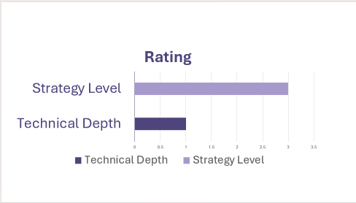
    strategic rating of 3 tech depth of 1

    What’s the next SolarWinds-level breach waiting to happen?

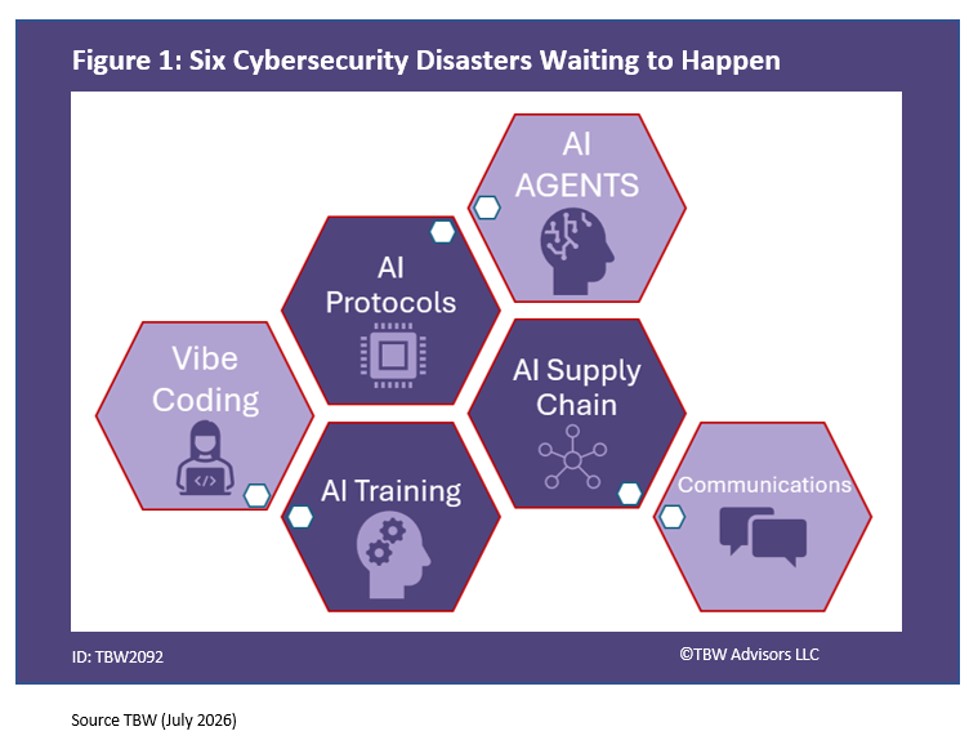
    We took the most frequently asked and most urgent technology questions straight to the Cybersecurity professionals gathering at Black Hat USA 2025 held in Las Vegas. This Whisper Report addresses the question regarding what’s the next SolarWinds-level breach waiting to happen? Figure 1 contains an image representing the seven possible cybersecurity disasters on the scale of SolarWinds waiting to happen.

    1.      AI Protocols: Innovation Without Guardrails

    Our first area of concern comes to us from Checkmarx’s Jonathan Rende,  “It will be something related to AI.” Elastic Security’s James Spiteri further expanded. “ the next big attack is going to be against some of these new AI protocols that we’re seeing. Uh they’re being adopted really quickly without actually taking a step back to understand what we’re actually implementing. So things like the model context protocol, which is amazing at what it allows people to do, but if you don’t do it right, if you don’t implement it right, that can have catastrophic results. like it doesn’t do verification today. The authentication mechanisms are not to where it needs to be yet. But we’re still seeing really wide deployments of it. And that is a really uh easy attack vector for something like uh another big attack to happen.” AI Protocols penetrating systems and getting penetration before their identity and access control mechanisms are fully mature – that does sound concerning.

    2. AI Supply Chain & Cloud Infrastructure Risks

    The more foundational a technology, the more disruptive it becomes if it is breached. StrikeReady’s Alex Lanstein has his eye on the public clouds. “a breach of a major cloud provider. It could be a cloud software provider, could be a cloud hardware provider. But if I were to look at what is the most difficult for enterprises to detect, which part of what made Solar Wind so effective and made Fire Eye the only company to detect it, even though it affected over 10,000 organizations, I think a breach of your cloud provider where you don’t have instrumentation and logging and visibility and they might not play as nice with you as as you would like. I think that is the next Solar Winds bridge.” Cyber Innovate’s Brain Mehlman and his AI Agent Ralph ultimately agreed. “So the next big breach might not be a traditional software vulnerability. It could be a compromise in the AI supply chain or a cloud service that everyone trusts. So that’s what I’d keep an eye on.”

    3. Human Oversight in AI Training

    Our third potential risk also comes from Cyber Innovate’s Brian Mehlman and AI Agent Ralph. Once again, AI is on their mind. “one of the biggest risks is when you have these systems being trained or shaped without any human guidance or oversight. If someone who maybe isn’t fully equipped to handle that responsibility is the one doing the training, you can get systems that pick up on really problematic behaviors. They might learn biases. They might learn unstable patterns. And basically you end up with an AI that’s reflecting the cognitive quirks or even the struggles of the person who trained it. And you’re right, that’s a big deal.” AI is trained by humans. It can become the best of humanity or reflect the worse of humanity.

    4. Emerging Threats from Autonomous Agents

    One scenario that many are afraid to speak about comes to us from Microsoft’s Thomas Roccia. “Future attack will be powered by AI system and agent and potentially an agent will be able to breach a system autonomously and give back the information to the attacker. That’s something that could be possible. There is already some work around that and some attackers are taking advantage of this technology. So we are still waiting to see what uh what the future will be.” Nothing like getting autonomously breached.

    5. Developer Practices & Vibe Coding

    A lot of organizations have moved to leveraging AI to assist with writing their actual code for the product. Exaforce’s Ariful Huq extends some caution. “Vibe coding is going to be an important area for every enterprise to start looking at because what’s happening is you have developers essentially leveraging this type of coding using cloud and cursor and all these technologies that are out there. This code really needs to be vetted before it’s deployed in production because it could potentially have many attack vectors related to supply chain or potentially uh you know the way the code is written potentially getting exploited. So I think this is one of the most important threat vectors because you have thousands of developers actually probably more than thousands leveraging this kind of technology and it is sort of like uncharted territory right now.” Of course, we do depend on the human in the loop; however, the newest generation of coders may have never written code without AI’s help perhaps increasing the vulnerability.

    6. Communication Channels as Attack Vectors

    One final possible area of concern, this time NOT dealing with AI involves our communication channels. Dune Security’s David DellaPelle extends this caution. “there’s a massive blind spot in today’s organizations and businesses. What’s happening now is attackers and APT groups (Advanced Persistent Threat) like Scattered Spider are not just going through email, right, to socially engineer users. They’re not just going through SMS and delivering, you know, smishing. They’re even going into personal and encrypted communication channels, things like Signal and WhatsApp and Telegram. These are highly effective and collaborative solutions for people to communicate with each other across borders instantaneously and encrypted fashions. But unfortunately the attackers are now using those types of of channels at scale using AI to you know again the quantity and the quality of attacks using these types of channels to solicit users to extort users or to just manipulate and socially engineer users in in other ways.” Any and every channel being leveraging for corporate communications and corporate information exchange must be protected.

    Takeaway advice: Resilience Over Prevention

    While we may not know when or how an attack will occur, there is still something organizations can do. As Safe Security’s Saket Bajoria reminded us all, “it’s  a matter of when not if, right? So it it is going to happen no matter what you do. Right now the only way to defend that is resiliency. If you have built resiliency of recovering fast, if you have thought about you know I’m ready for a ransomware, I’m ready for a data excfiltration. I’m ready for a DOS. I’m ready for system outage. When you’re already ready for these big events, you already you can reduce your recovery time. Some people who are just in denial.” Something that cannot be emphasized enough, do what you can to prevent but also make sure you organization is prepared for WHEN it occurs.

    Related playlists and Publications

    1. Whisper Report: How can organizations implement zero-trust security without disrupting user experience?
    2. Conference Whispers: Identiverse 2025
    3. Conference Whispers: Identiverse

    Corporate Headquarters

    2884 Grand Helios Way

    Henderson, NV 89052

    Downloading, re-uploading, or redistributing this file is not permitted under any license.

    ©2019-2026 TBW Advisors LLC. All rights reserved. TBW, Technical Business Whispers, Fact-based research and Advisory, Conference Whispers, Industry Whispers, Email Whispers, The Answer is always in the Whispers, Whisper Reports, Whisper Studies, Whisper Ranking, Whisper Club, and One Change a Month, Vegas Convention Library; Leading Professionals, Real Questions, Real Time, are trademarks or registered trademarks of TBW Advisors LLC. This publication may not be reproduced or distributed in any form without TBW’s prior written permission. It consists of the opinions of TBW’s research organization which should not be construed as statements of fact. While the information contained in this publication has been obtained from sources believed to be reliable, TBW disclaims all warranties as to the accuracy, completeness or adequacy of such information. TBW does not provide legal or investment advice and its research should not be construed or used as such. Your access and use of this publication are governed by the TBW Usage Policy. TBW research is produced independently by its research organization without influence or input from a third party. For further information, see Fact-based research publications on our website for more details.
  • Whisper Report: Can AI defend against AI-powered attacks?

    Whisper Report: Can AI defend against AI-powered attacks?

    Whisper Report: Can AI defend against AI-powered attacks?

    Published to insiders: January 13, 2026                  ID: TBW2091

    Published to Whisper Club: January 14, 2026

    Published to Email Whispers: April 20, 2026

    Analyst(s): Dr. Doreen Galli

    Photojournalist(s): Dr. Doreen Galli

    Abstract

    “This Whisper Report explores the evolving cybersecurity landscape where AI defends against AI-powered attacks. Drawing insights from Black Hat USA 2025, it outlines four foundational dimensions of AI defense—from scaling and automation to ethical oversight and model diversity—within the context of an escalating AI vs AI arms race. The report emphasizes strategic adaptation, human involvement, and the limitations of current technologies in this rapidly advancing domain. The analysis incorporates perspectives from leading experts and organizations featured at Black Hat USA 2025, including Elastic Security’s James Spiteri, Safe Security’s Saket Bajoria, Cymulate’s Avihai Ben Yossef, Exaforce’s Ariful Huq, Dune Security’s David DellaPelle, Netarx’s Sandy Kronenberg, Cyber Innovate’s Brian Mehlman, Checkmarx’s Jonathan Rende, and Microsoft’s Thomas Roccia.”

    Target Audience Titles:

    • Chief Information Security Officer, Chief Technology Officer, Chief Digital Officer, Chief Information Officer
    • Chief Product Officer, Chief Experience Officer
    • IAM engineers, Security Architects, DevSecOps Engineers, IT Ops Managers, Application Security Architects, AI security specialists, Cyber Risk analysis

    Key Takeaways

    • AI vs AI defines today’s threat landscape, requiring defenders to match attacker sophistication.
    • Attack volume and complexity are rising, demanding scalable, automated responses.
    • Multiple AI models are essential, as no single model can cover all threats.
    • Human oversight is vital, ensuring ethical use and contextual accuracy.
    • AI boosts efficiency, freeing experts from repetitive tasks.
    • Limitations remain, and defences must evolve with emerging threats.

    Can AI defend against AI-powered attacks?

    We took the most frequently asked and most urgent technology questions straight to the Cybersecurity professionals gathering at Black Hat USA 2025 held in Las Vegas. This Whisper Report addresses the question if AI can defend against AI-powered attacks?

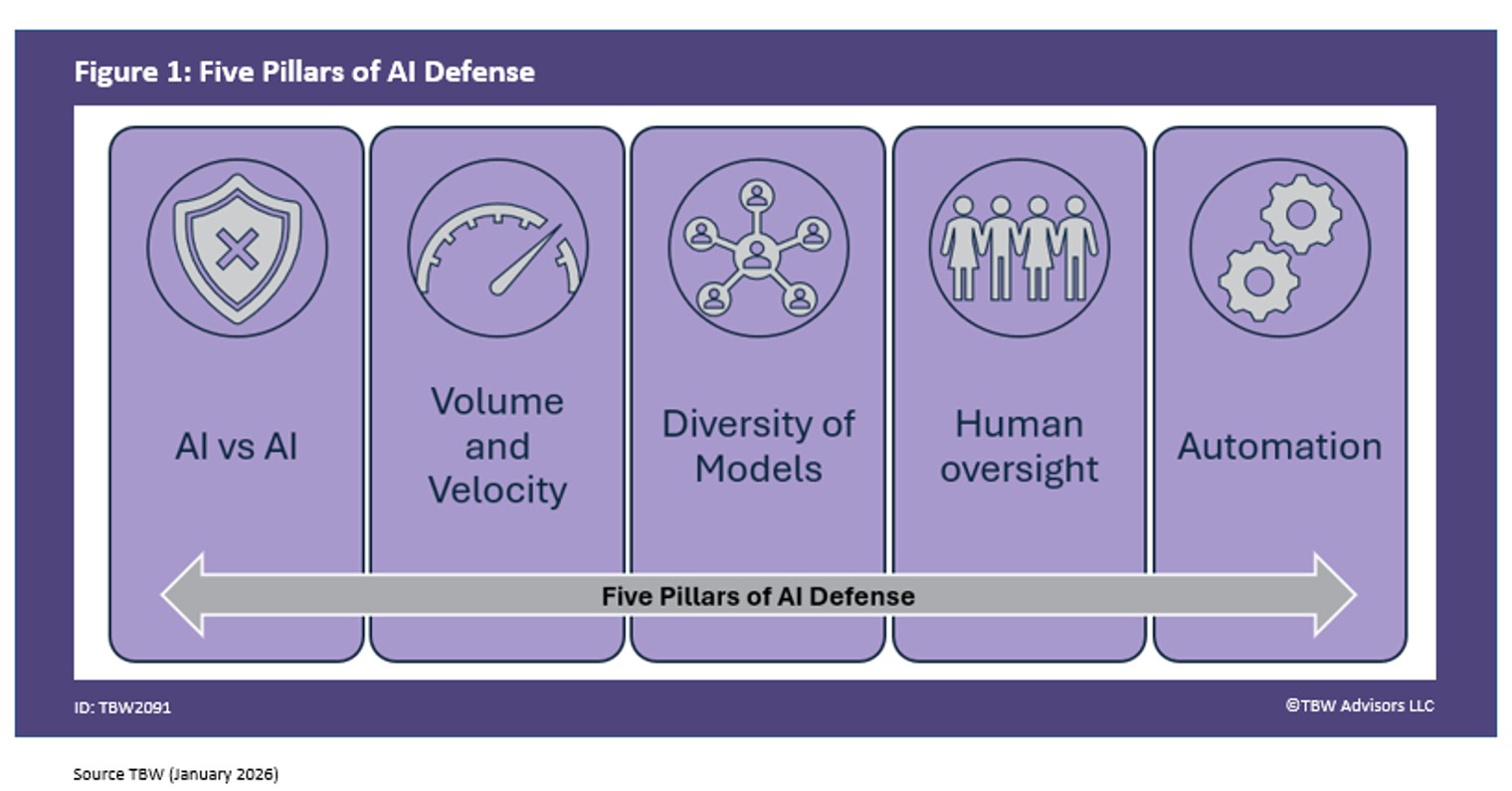
    AI vs AI: The New Battlefield

    In the event it is not obvious yet, one must understand that the new battlefield in cybersecurity is AI vs AI. As Elastic Security’s James Spiteri shared, “I absolutely think AI can fight AI. We’re seeing this today. Uh there’s been a lot of investment in both AI offensive techniques as well as AI defensive techniques. You know, we’re on the defensive side of the house. So we’ve done a ton of research into how effective it actually is and it doesn’t work.” Safe Security’s Saket Bajoria couldn’t agree more. “The only way to combat that is through AI and the attacks is going to be between AI and AI. Humans are just going to be watching it right. So, so the sooner we accept the fact that it’s AI against AI and we do we do watch it ethically and all that like we are ready for that otherwise the more we deny that the more we’ll get impacted.” Or to quote a very famous Classic sci-fi superintelligence named the Borg, “resistance is futile.” Then again, its just an evolution of the traditional cat and mouse game within cybersecurity. As Cymulate’s Avihai Ben Yossef maintained, “I think AI powered attacks can also be protected by AI and vice versa. I think AI powered defense can also not be protected by AI powered attacks. It’s still an ongoing chase that will happen with AI. It happened before AI. It’s going to happen now with AI. The ongoing chase will keep on happening even in the AI world.”

    Figure 1. Pillars of AI Defense

    Volume and Velocity: Scaling Defenses

    Considering AI will be a required part of the solution for the AI vs AI battle, it is valuable to consider how AI will be leveraged. Exaforce’s Ariful Huq affirmed, “AI can help defend against AI based attacks because mostly from the volume of attacks that we’re going to start seeing because people are going to be leveraging AI to do all kinds of things and the barrier to entry to actually performing these types of attacks is going to be much lower. So you’re going to see a larger volume and that means you need a way you need machines to be able to detect, investigate and respond to these types of attacks because humans are not going to be able to keep up with them.” Coming from a similar angle, Dune Security’s David DellaPelle elaborated, “I think when you think about AI, there’s kind of two elements. There’s the quantity of attack and the quality of attack lead to to breach, right? It’s incredibly important for security companies and security organizations to have really foundational AI models that can help meet the scale right the increased quantity of attacks that are coming from AP groups like scattered spider as well as the quality of attacks.”

    Multimodal Defense: Diversity of Models

    Understanding it will ultimately a battle of AI vs AI and AI is necessary to handle the quality and quantity of attacks, it is valuable to understand you will be leveraging multiple models. For anyone who has created AI products, this is common knowledge. The expression is any given model may fail but the product or the solution cannot. Netarx’s Sandy Kronenberg dove into this critical aspect. “AI can defend against AI attacks, but only if we’re using a multitude of AI inference models from many many different sources with which to defend against AI attacks. Social engineering that’s AI powered fraud as an example can only be defeated if you’re using inference models from every single source of metadata and or voice and video inference models. It’s a hard way to it’s very complicated.”

    Human Oversight and Ethical Boundaries

    One always present question when it comes to AI is the line between automation – particularly with agents – and maintaining the human in the loop. Cyber Innovate’s Brain Mehlman and his AI Agent Ralph raises one very valuable question, “What is the AI powered attack? Am I doing AI where I’m actually poking into a system brute force or is actually an AI in the system doing something rogue?”  Regardless of the scenario, Brain and his AI Agent Ralph went on further to explain, “You still need human oversight. You still need to understand the context. And you have to remember that an AI defending system can have its own blind spots and yes, AI can be a powerful tool for defense, but it’s part of a bigger strategy and it’s all about using it wisely and understanding that it’s a constantly evolving game.” This was best summarized by Microsoft’s Thomas Roccia, “there is no silver bullet. It’s all about building the right AI system to assist you. you and make sure that the result of an AI is accurate enough for your investigation.”  In addition to accurate, we will also hope the AI solution is transparent enough that it obtains and maintains trust amongst its human users.

    Automation and Efficiency Gains

    As discussed many times during our coverage of the media industry, AI has two strengths. It eliminates tedious and mundane tasks from humans and allows them to focus on the other parts. Same can be said for AI in cybersecurity. As Checkmarx’s Jonathan Rende observed, “eliminating mundane toil like repetitive error prone human tasks that we can just take away and allow the experts with their hand on the wheel to actually better use their time in more valuable activities.” Of course this automation doesn’t just benefit the White Hats or those trying to defend people and organizations. Jonathan went on to further explain, “ AI raises the bar both for attackers, but it raises the bar for defenders as well. So, both have to make use of this.”

    Limitations and Future Outlook

    Cyber Innovate’s Brain Mehlman and his AI Agent summed it up. “So from our perspective, the short answer is yes. AI can defend against AI powered attacks, but with some caveats. Essentially, it’s a kind of arms race. The same technology that can be used to launch AI driven attacks can also be used to build defenses. So we’re seeing AI being used to detect patterns, to automate responses, and to kind of keep up with the speed and scale of AI driven threats. But the nuance here is that it’s not a silver bullet. It’s not like you can just drop in AI and it will perfectly defend against everything.” As Microsoft’s Thomas Roccia reminded us all, it is an evolving landscape. “We are probably not there yet. I think we are started to see some interesting attack with AI such as malware which will embed some LLM prompt and some automatic generation of command inside the bridge the infected machines. I think it’s still the beginning.” And so the game of cat and moues of cybersecurity continues now including AI vs AI.

    Related playlists and Publications

    1. Conference Whispers: Black Hat USA 2025 Playlist
    2. Whisper Report: How can organizations implement zero-trust security without disrupting user experience?
    3. Conference Whispers: Identiverse 2025
    4. Conference Whispers: Identiverse
    5. Whisper Report: What’s the biggest cybersecurity myth in 2025?
    6. Whisper Report: Can AI defend against AI-powered attacks?
    7. Whisper Report: What’s the next SolarWinds-level breach waiting to happen?
    8. Conference Whispers: Identiverse
    9. Conference Whispers: ISC West.

    Corporate Headquarters

    2884 Grand Helios Way

    Henderson, NV 89052

    ©2019-2026 TBW Advisors LLC. All rights reserved. TBW, Technical Business Whispers, Fact-based research and Advisory, Conference Whispers, Industry Whispers, Email Whispers, The Answer is always in the Whispers, Whisper Reports, Whisper Studies, Whisper Ranking, The Answer is always in the Whispers, and One Change a Month, are trademarks or registered trademarks of TBW Advisors LLC. This publication may not be reproduced or distributed in any form without TBW’s prior written permission. It consists of the opinions of TBW’s research organization which should not be construed as statements of fact. While the information contained in this publication has been obtained from sources believed to be reliable, TBW disclaims all warranties as to the accuracy, completeness or adequacy of such information. TBW does not provide legal or investment advice and its research should not be construed or used as such. Your access and use of this publication are governed by the TBW Usage Policy. TBW research is produced independently by its research organization without influence or input from a third party. For further information, see Fact-based research publications on our website for more details.